












Winter Storms Are Taking Toll on Wrecked MSC Baltic III and Salvage Efforts
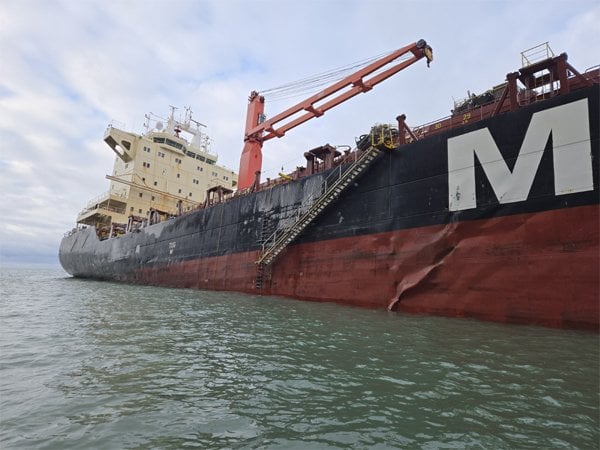
The Canadian Coast Guard released a series of pictures showing the damage to the hull of the MSC Baltic III, which has been grounded in a remote part of Newfoundland since February 2025. The hull shows significant additional damage after having been pounded by the high surf during a storm in early November and again in early December.
It was the same high surf and winter weather which had driven the ship ashore in February after it lost power while bound for Corner Brook, Newfoundland. Canadian forces organized a daring helicopter rescue to safety remove the crew from the ship. However, it was driven ashore on the rocky coast and the Coast Guard since then has said it would be difficult to remove. It has been overseeing an effort by T&T Salvage, which was retained by MSC Mediterranean Shipping Company.
After the early November storm, the Canadian Cost Guard reported there was visible damage in a number of areas, including below deck, in the framing, and bulk heads in the area of a water ballast tank. Anticipating the onset of winter weather and the dangers to the ship, the salvage teams had determined to add ballast water to the grounded vessel earlier in the fall to help keep it stable in preparation for winter and worsening weather conditions. A cableway was also completed from shore to provide access after they had previously been dependent on access from the waterside, which was more dependent on conditions.
The ship was again subjected to severe winter conditions on December 5 and 6. Canadian Coast Guard and salvage crews boarded the MSC Baltic III on December 7 and 8 to assess the storm damage.
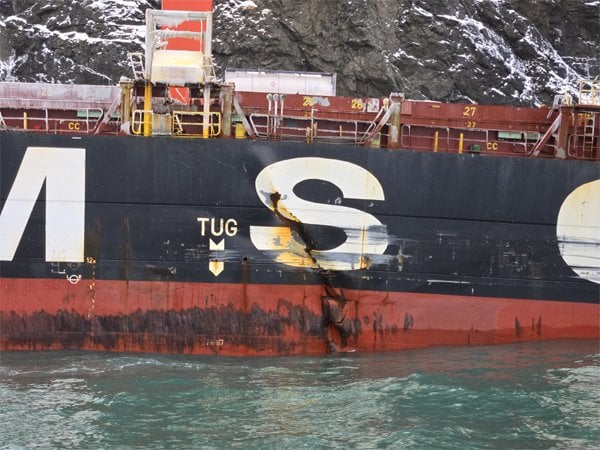
“The hull has sustained significant additional damage, including a noticeable change in the condition of the steel plate buckling on the starboard and port sides of the vessel,” reports the Coast Guard. “The stern portion of the vessel is also visibly lower in the water. Some small salvage equipment onboard was also found damaged.”
They were attempted to do a shoreline survey, but it was being hampered by the weather. Some residual amounts of oily debris had been found. After the last round of winter weather, they said a tar ball had also been found.
The focus in September and October had been to complete a washing of the fuel tanks and to remove as much residual oil as possible from the vessel. They reported that 1665.7 cubic meters of heavy oil and other pollutants had been removed as of early September.
In addition, a few containers had remained in the holds of the ship, which were flooded. Spoiled food in some of the cargo had been causing fluctuating levels of hydrogen sulfide gas meaning that precautions had to be taken by crews working on site. The flooding also slowed the removal of the remaining containers as they needed to be dewatered in a controlled fashion not to create additional pollution. As of late September, the Coast Guard said there were 65 containers remaining onboard the vessel, below deck and submerged in water.
As the severe conditions subside, the crews will get back aboard for further damage surveys, and they will continue to clean up the debris being washed from the hulk. It is anticipated that winter storms will continue to impact the area with the Coast Guard saying additional reports will be provided should the vessel incur other damage.
It had always been anticipated that it would be difficult to remove the vessel. The increasing damage raises the likelihood that they will scrap the vessel in place.
Content Original Link:
" target="_blank">