










Contract Awarded for the Removal of the MSC Baltic III Wreck
Fourteen months after the containership MSC Baltic III blacked out and washed ashore in a remote part of Newfoundland, Canada, MSC Mediterranean Shipping Company has awarded a contract for the removal of the wreck. It will be the second phase of the effort after a program in 2025 that focused on the potential pollutants aboard the containership.
The MSC Baltic III (33,767 dwt) was lost on February 15, 2025, while outbound from Canada. The ship was caught in a fierce winter storm that was driving it toward shore, and the Canadians organized a dramatic helicopter rescue of the 20 crewmembers. The ship grounded in Cedar Cove, near Lark Harbour, Newfoundland. It is approximately 50 miles from Corner Brook and was initially only accessible by boat.
MSC has awarded the removal contract to Resolve Marine Group, based in Florida. The company is highly experienced in major salvage efforts.
No details have yet been released on the plan for the operation or its timetable. The Canadian Coast Guard, which has been overseeing the operations, has scheduled a technical briefing for next week with Resolve Marine to review the plans.
In the past, the Coast Guard supervisor, Bruce English, said the ship was significantly damaged, making it difficult to attempt to remove it in one piece from the shoreline. Winter storms in 2025 and again in 2026 have battered the ship. English recently told CBC that the waves have caused the stern quarter to lift up and drop, causing buckling in the center of the vessel. The stern is now sitting on the ocean floor, and there are visible holes in the hull and cracks in the deck plating.
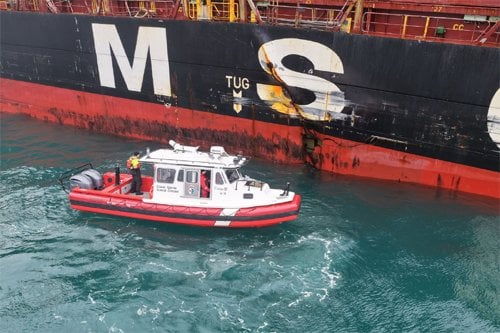
Photo from January 2026 showed the emerging damage, which has expanded over the course of the winter (Canadian Coast Guard)
Reports are that two massive boulders penetrated the hull. Both the engine room and at least one of the cargo holds were penetrated and have flooded. The ship is 208 meters (680 feet) in length.
In 2025, T&T Salvage was retained by MSC to remove oil from the ship’s tanks and to salvage the containers. Approximately 1,700 metric tons of fuel were removed before operations stopped for the winter, although some residual amounts are still aboard in the tanks and engine room. The ship had 472 containers aboard, many of which were empties. The Coast Guard reports 407 were removed, but the remaining 63 in the cargo holds are badly damaged and waterlogged. Some contained rotting foodstuffs or other material.

that matters most
Get the latest maritime news delivered to your inbox daily.
Last year’s effort also created an access road to get teams to the area where the ship is grounded. A cableway was also strung from the shore, providing an access route. To prepare the wreck for the winter, they had also added ballast in hopes of securing the ship from some of the harsh weather.
The vessel is close to a First Peoples’ area, and concerns remain about potential pollution and damage to the fishing areas. Canadian officials report they continue to liaise with all the parties, and more details regarding the removal plans are expected from next week’s briefing.
Content Original Link:
" target="_blank">