











The hull of a ship gives it its shape and
The hull of a ship gives it its shape and buoyancy and protects the parts and components inside. A ship’s main propulsion engine, generators, boilers, fuel pumps, air compressors, and other such equipment are all located within the hull of a ship.
Additionally, the crew and passenger quarters, as well as the cargo carried by the ship, are distributed between its hull and deck. The ship’s stability in water, speed, load-bearing capacity, efficiency, and safety are affected to a great degree by the structure of its hull.
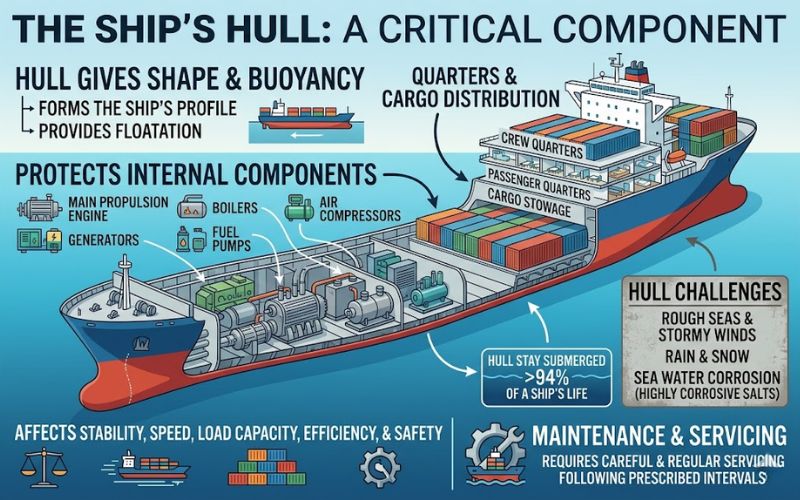
A ship hull has to resist rough seas, stormy winds, rain, and snow. Sea water can be highly corrosive because of the various salts it contains. Because the ship’s hull stays submerged most of the time, it is subject to higher levels of corrosion than other parts of the ship.
An estimated 94% of a ship’s life is spent on water. During a ship’s life, as with most of the ship’s infrastructure, its hull has to be maintained and serviced carefully following prescribed intervals.
Types
Content Original Link:
" target="_blank">