








Shipping is often described as

Shipping is often described as the engine of global trade, but behind every cargo movement lies a network of specialised actors whose roles shape the industry’s efficiency and legal framework. Whether goods travel across oceans in containers or bulk carriers, each of these players carries responsibilities defined by commercial practice and maritime law. Understanding who they are—and how they interact—forms the foundation for anyone embarking on a journey into shipping or maritime legal studies.
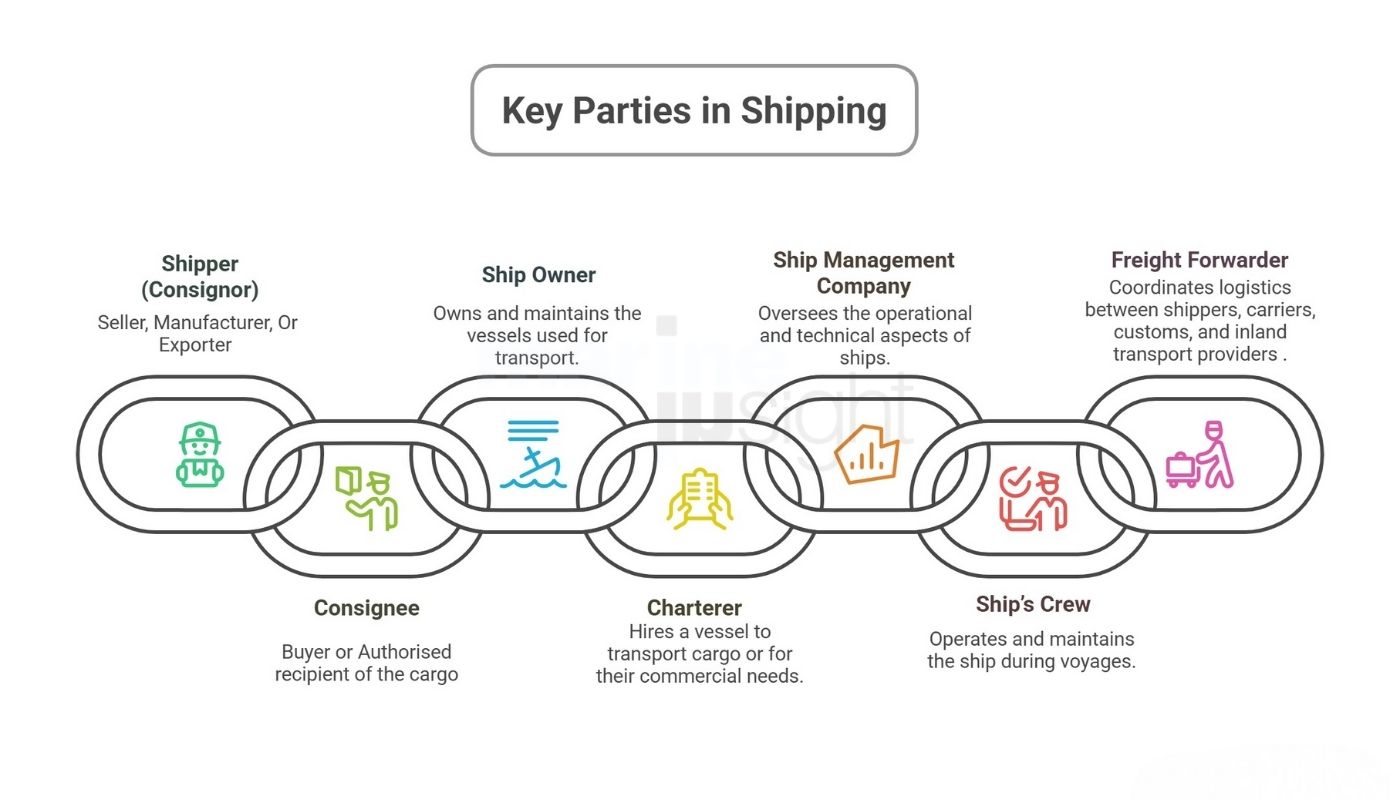
Below is an overview of the essential parties in shipping who keep the world’s supply chains in motion.
1. Shipper (Consignor)
The shipping process begins long before a vessel casts off its lines. The shipper, usually the seller, manufacturer, or exporter, is responsible for initiating the movement of goods. Their role includes arranging transportation, preparing export documentation, packaging cargo to international standards, and ensuring regulatory compliance. Shippers may also work closely with freight forwarders to secure space onboard vessels and navigate procedural requirements at origin ports.
A shipper’s accuracy in documentation—especially the bill
Content Original Link:
" target="_blank">