









Mexican Aid Traveling on Merchant Ship Reaches Cuba as Tensions Remain High
Cuban officials hailed the arrival of a Chinese-owned cargo ship carrying aid from Mexico and Uruguay to the impoverished island. Mexico has continued to send aid shipments but, in deference to the Trump administration’s threats of secondary sanctions, suspended badly needed energy shipments to the island.
The cargo ship Asian Katra (10,300 dwt) arrived in Havana on Monday morning, May 18, coming from Asipona Pajaritos in Veracruz. Owned by a Chinese company, the ship is registered in Panama and appeared to have been permitted to proceed without interference from the United States. It was the first shipment aboard a merchant vessel, and aboard were 1,700 tons of supplies reported to include rice, beans, and milk.
Cuba’s food minister, Alberto López Díaz, hailed the arrival, saying it was the latest sign of solidarity with the Mexican people, with the added support from Uruguay. He thanked Mexican President Claudia Sheinbaum for her “leadership and firm commitment.” He called it a critical donation received with the deepest gratitude.
“This aid arrives at times of great economic difficulties, worsened by the criminal blockade of the United States. It is an act of brotherhood that strengthens hope and eases suffering,” wrote Alberto López Díaz on social media.
Cuban officials claimed it was the eighth shipment from Mexico, which began the humanitarian deliveries in February. The French news agency AFP and the Associated Press, however, could only account for four prior shipments: two Mexican warships in February and two more in March. Cuban officials said they have now received over 3,125 tons of aid, including food, medicine, hygiene products, and solar panels, although critics claim little of it is reaching the average Cuban.
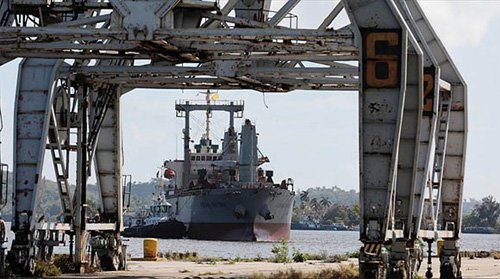
Asian Katra was the first merchant arriving after four Mexican warships brought aid in February and March (Alberto López Díaz)
It arrived as the Trump administration continues to pressure Cuba and make public statements inferring it will take over the island. There are also reports that the administration is exploring an indictment of former Cuban President Raúl Castro.
Cuban President Miguel Díaz-Canel fanned the tensions by writing on social media, “The persistent hostility of the United States toward Cuba, including explicit or implicit military threats, constitutes in itself a violation of international law.” He asserted that history demonstrates that Cuba has never posed a real threat to the security of the United States.
The energy situation on the island remains precarious due to the U.S. blockade. Last week, the state-run power company said the power grid in the eastern provinces had collapsed. Blackouts are now regular occurrences on the island.
Diaz-Canel described the power situation as “tense.” He said early last week that the emergency fuel shipment from Russia received at the end of March had run out. Cuba only produces approximately 40 percent of its energy needs and has depended on shipments from Venezuela and others.

that matters most
Get the latest maritime news delivered to your inbox daily.
The Russian tanker Anatoly Kolodkin had delivered a donation of 100,000 metric tons of crude, arriving at Matanzas on March 31. After that, Russia promised a second delivery in the coming week, but so far it has not arrived. The Russian-flagged product tanker Universal (50,923 dwt) appeared to be heading for the island, but Bloomberg reported in mid-April that the vessel suddenly stopped in the middle of the Atlantic.
The tanker continues to sit in the Atlantic, displaying a message of “awaiting orders.” Reports suggest the vessel is about two weeks' sailing time from Cuba. The last delivery arrived after Donald Trump said he did not object. An earlier shipment aboard the tanker Sea Horse, however, appeared to be diverted in March after reports of U.S. threats of intervention.
Content Original Link:
" target="_blank">