











America's 50 most iconic brands, from Main Street to Silicon Valley
From blue jeans and burgers to planes, pixels and payment cards, these iconic American brands didn't just build companies, they built the country we recognize today.
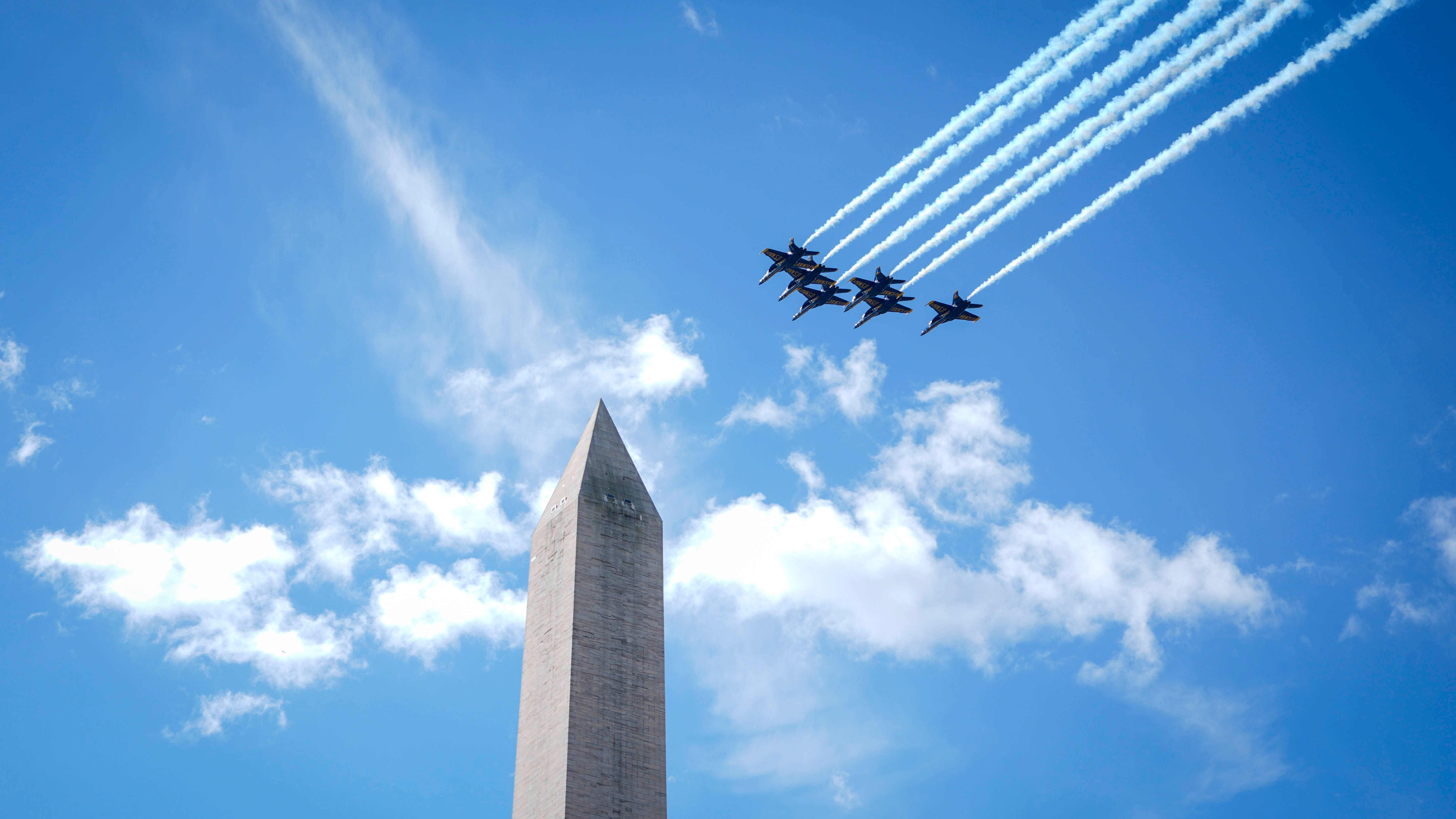

As the United States approaches its 250th birthday, it’s worth asking a deceptively simple question: Which companies helped build the America we recognize today?
From the brands that powered the Industrial Revolution to the ones that reshaped how we shop, ride, eat, listen and connect, these American companies have long been more than just businesses. They’ve been cultural forces, economic engines and mirrors of the country’s evolving identity.
Explore American Journeys: We retraced iconic trips that help define our nation
To mark this milestone, USA TODAY’s Iconic Brands 50 highlights more than 50 American companies whose influence has endured across generations. These brands were chosen for their historical significance, economic impact, cultural influence, innovation and lasting relevance, with an emphasis on pioneers that created or transformed industries, shaped everyday life and helped define how the world sees the United States.
This is not a ranking of market caps or quarterly wins. It’s a snapshot of legacy favoring enduring national impact over short-term success, and invites debate about what it truly means to be iconic.
Visa
- Established: 1958, as BankAmericard
- Current CEO: Ryan McInerney
- Market cap: $632 billion
The modern credit card was in its infancy when Bank of America conceived the BankAmericard in 1958. The company takes credit for launching the nation’s first consumer credit card. (Diners Club claims to be the first “multipurpose charge card,” with a 1950 launch.) After a shaky start in California, the BankAmericard caught on in the 1960s and inspired a competitor, Mastercard, in 1966.
Gradually, Bank of America began licensing the card to other banks, birthing an international network. In 1976, the network rebranded as Visa.
In the 1980s, Visa acquired a stake in an ATM provider, giving its customers access to cash machines.
Visa went public in 2008.
Today, according to Investopedia, the electronic payments business features four main firms: Visa, Mastercard, Discover and American Express. Visa and Mastercard operate exclusively as networks: Neither company issues its own credit cards.
Both Visa and Mastercard are public, but at the moment, Visa is larger, with a $628 billion market capitalization, as of Jan. 21, compared with Mastercard’s $477 billion.
Today, Visa operates in more than 220 countries and territories and is accepted at more than 175 million merchants, according to its corporate website.
In the four-way battle with the other payment networks, Visa and Mastercard are the big dogs. Discover and American Express have been playing catch-up.
Visa may not be the clear-cut winner of the credit card wars. Yet, the brand has more than earned its historic slogan, “Everywhere you want to be.”
– Daniel de Visé, USA TODAY
Meta
- Established: 2004, as Facebook
- Current CEO: Mark Zuckerberg
- Market cap: $1.8 trillion
The origin story of Facebook reads like the account of a brash college student who made news for the wrong reasons. Mark Zuckerberg created a website in 2003, filled it with hacked photos from online Harvard house “facebooks,” and launched a “hot or not” game for rating students.
That site was swiftly shuttered. The next year, however, Zuckerberg and three cofounders launched The Facebook, a site where Harvard students could populate their own web pages. The Facebook spread to other elite universities. Within months, Zuckerberg had left Harvard to work on Facebook full-time. By year’s end, The Facebook had a million users.
Remember MySpace? When Facebook reached the million mark, its social media rival boasted 5 million users. But Facebook would soon leave MySpace in the dust.
Gradually, Zuckerberg introduced the features that would addict Facebook users: the news feed, the wall, “tagging” friends in photos, and the “like” button.
Facebook expanded to high schools in 2005. By the next year, anyone 13 or over could join. Facebook was no longer an exclusive club, but it was a popular one.
Facebook continued to expand, buying the photo-heavy Instagram in 2012. Facebook went public that year, the largest tech IPO in history at the time. By the end of 2012, Facebook had 1 billion users.
In 2014, Facebook bought the messaging app WhatsApp for $19 billion, and Zuckerberg made a big push for virtual reality. In 2017, Facebook hit 2 billion active users. In 2018, Instagram reached 1 billion users.
Facebook has survived a seemingly endless string of controversies: Allegations of sharing user data without consent, of enabling hate speech and conspiracy theories, and of publishing misinformation.
In 2021, Facebook changed its brand to Meta, reflecting vague ambitions around creating a metaverse.
Today, Facebook boasts more than 3 billion regular users. According to Pew Research, roughly 7 in 10 American adults use the service. It’s the company that introduced “friending” – and “unfriending” – into the national conversation.
– Daniel de Visé, USA TODAY
Boeing
- Established: 1916, as Pacific Aero Products Company
- Current CEO: Kelly Ortberg
- Market cap: $185 billion
Boeing is one of the world’s largest aerospace companies and the leading producer of commercial jets. The company has had a rough couple of years, with big losses and allegations of safety lapses tarnishing a proud history.
The company began in 1916 as Pacific Aero Products Company, founded by William Boeing, a timber man who had collaborated with a Navy officer in building a two-seat seaplane. Boeing built aircraft for the Navy in World War I, starting a long and fruitful association with the U.S. military.
In the years to come, Boeing would buy up other aircraft companies and develop some of the most iconic military aircraft, including the B-17 Flying Fortress, the B-29 Superfortress and the B-52 Stratofortress. Boeing and its partners produced 98,965 aircraft in World War II.
After the war, Boeing struggled against rivals Lockheed and Douglas in the commercial aircraft market. Boeing bounced back in the 1950s with the 707, a four-engine plane that could cross the Atlantic in a single, relatively short flight. Its speed and smooth ride set a new standard. Next came the 727 and 737, and finally the massive 747. At first, the 747 nearly bankrupted Boeing, but it would become one of the best-selling commercial airplanes in history.
Joining the space race, Boeing crafted the Lunar Orbiter, the first NASA craft to orbit the Moon, and the Mariner 10, which snapped the first close-ups of Mercury. Boeing built parts of the Saturn V rockets that flew astronauts to the moon.
In 1996, Boeing announced a merger with rival McDonnell Douglas, the largest acquisition in aerospace history, leaving Boeing as the only commercial jet manufacturer in America.
After the new millennium, Boeing rolled out the 787 Dreamliner, which became an industry leader for speed and fuel efficiency, propelling the company to massive revenues.
The last few years have been harder, between COVID-19 setbacks and recent safety setbacks. But Boeing flies on.
– Daniel de Visé, USA TODAY
Tesla
- Established: 2003
- Current CEO: Elon Musk
- Market cap: $1.4 trillion
These days, the Tesla brand is synonymous with Elon Musk, the world’s richest person. But it wasn’t always so.
Tesla’s founders were a couple of engineers, Martin Eberhard and Marc Tarpenning, who set out to build an electric sports car. They started the company in 2003 and named it after Nikola Tesla, the Serbian-American inventor, known for his work with electricity.
Musk joined the venture in 2004, contributing funding from the wealth he'd amassed as cofounder of PayPal. He stepped in as chairman.
Over the next few years, Musk proved himself an ace fundraiser, helping to secure capital from the likes of Google co-founders Sergey Brin and Larry Page.
The first prototype, the Tesla Roadster, arrived in 2006, attracting celebrity customers like George Clooney.
After many delays, the Tesla Roadster finally emerged in early 2008. It could go roughly 245 miles on a charge, unheard of for an electric car at the time. It went 0 to 60 in less than 4 seconds and could hit a top speed of 125 mph. Its price tag passed $100,000.
In late 2008, at the dawning of the Great Recession, Musk stepped in as CEO.
Tesla went public in 2010, the first automaker to join the American stock market since Ford.
The company’s attention shifted to the Model S, a mass-produced sedan, hailed by the automotive press. In 2012, Tesla began installing charging stations across the United States and Europe.
A low-cost Tesla, the Model 3, launched in 2017 with a price tag of around $35,000. It became the best-selling electric car in history.
Most Americans know the rest of the story. In 2025, Elon Musk joined the second Trump administration, fracturing Tesla’s customer base and spawning “I bought this before Elon went crazy” bumper stickers.
Musk went quiet (at least by his standards) later in the year, and Tesla’s stock price rebounded.
Whatever Musk’s flaws, Tesla is a member of the stock market’s storied Magnificent 7, credited as the company that drove EVs into the American mainstream.
– Daniel de Visé, USA TODAY
Patagonia
- Established: 1973
- Current CEO: Ryan Gellert
- Market cap: $3 billion (estimated)
Patagonia’s history is as colorful as its name, which connotes a region of South America known for mountains.
Yvon Chouinard, the company founder, started out as a 14-year-old rock climber with the Southern California Falconry Club. Chouinard didn’t like the available climbing hardware, so he went to a junkyard, bought a forge and taught himself to be a blacksmith.
The climbing hardware he built was superior, and other climbers took note. Chouinard built a shop in his parents’ backyard in Burbank, California. He sold the gear out of the back of his car.
By 1970, Chouinard Equipment was the largest climbing hardware supplier in the nation. But Chouinard chose to back off from his core business because the climbing spikes were damaging mountain rocks. He created a new type of aluminum hardware that left the rock unharmed.
Chouinard also started selling climbing apparel, adapting garments out of rugby shirts and fake fur. He soon found that the high-end clothing business could support the marginally profitable hardware business. The first Patagonia store opened in 1973.
Over the decades, Patagonia has expanded from climbing gear into camping, surfing and other outdoorsy endeavors.
Patagonia has long been known for donating 1% of sales to nonprofits working to save or restore Earth’s habitats. The company has lobbied against climate-change deniers and hate speech, and in favor of voter registration initiatives.
Not surprisingly, Patagonia is big on sustainability: organic fabrics, recycled materials, and a light carbon footprint. The company’s purpose statement reads, “We exist to save our home planet.”
– Daniel de Visé, USA TODAY
Intel
- Established: 1968, as NM Electronics
- Current CEO: Lip-Bu Tan
- Market cap: $235 billion
Intel began as a conversation between two mid-career technologists one spring day in 1968. Gordon Moore chatted up Bob Noyce, who was mowing his lawn, and suggested they form a company to make semiconductor circuits for computers. The company was incorporated as NM Electronics (N for Noyce, M for Moore) that summer. They quickly changed it to Intel, which stood for "integrated electronics."
Intel’s first product, in 1969, was the 3101 Schottky random-access memory chip, the size of a pinkie fingernail. Not long after, Intel released the 1101, the first metal oxide semiconductor memory chip. The new technology yielded chips that were cheaper to make and of higher quality, clearing the way for lower-cost computers.
In 1970, Intel released the 1103, a chip that set semiconductors as the new standard for memory, replacing less efficient magnetic core memory. By the close of 1971, it was the world’s best-selling semiconductor.
Intel went public in 1971. That year, the company released the 4004, the first programmable microprocessor, offering greater computing power in a much smaller package.
In the 1970s, Intel focused increasingly on microprocessors, the “brain” of a computer. These numbers might ring familiar to computer buffs: the 8008 in 1972, the 8080 in 1974, and the 8086 in 1978. Each was geometrically more powerful than its predecessor.
In 1981, IBM selected the 8088 as the brain for its first mass-market personal computer, forging an enduring partnership between Intel and the PC.
In the 1990s, Intel’s Pentium microprocessor combined with Microsoft’s Windows operating system to supercharge PC performance. In this decade, the “Intel Inside” label was born.
Intel suffered a massive CPU recall in 1994. Nonetheless, the company’s partnership with IBM and Microsoft gave it market dominance over rival semiconductor makers, including AMD, Motorola and Sun Microsystems.
By the new millennium, Intel and Intel-compatible chips powered every PC except the Macintosh. Apple partnered with Intel in 2005, putting Intel inside nearly every personal computer.
But Intel’s dominance isn’t complete. As of 2025, Intel owns roughly three-quarters of the CPU market, with one-quarter controlled by rival AMD.
– Daniel de Visé, USA TODAY
HP
- Established: 1939, as Hewlett-Packard Company
- Current CEO: Enrique Lores
- Market cap: $18 billion (HP Inc.)
Hewlett-Packard has long been known as a reliable brand for personal computers. But HP started decades before Americans worked on PCs.
William Hewlett and David Packard met while studying electrical engineering at Stanford University. In 1938, they started building Depression-era tech gear in a Palo Alto garage. They started the company in 1939, choosing “Hewlett-Packard” over “Packard-Hewlett” in a coin toss.
With barely $500 in capital, the partners created an oscillator to test sound equipment. The Walt Disney Company bought eight of them to prep movie theaters for screening their classical-music film “Fantasia.”
During World War II, the young company collaborated with the Naval Research Laboratory to craft counter-radar technology and artillery shell detonators.
In the 1950s, HP introduced high-speed frequency counters, technology that helped FM radio and television broadcasters set their signal frequencies.
Hewlett-Packard went public in 1957, its shares selling for $16 apiece.
A string of complex but consequential inventions followed, including the atomic clock (1964), capable of synchronizing time within a millionth of a second, and light-emitting diodes (1966), a technology better known as LED.
In the late 1960s and early 1970s, HP rolled out pioneering desktop and pocket calculators.
HP introduced its first personal computer in 1980. The company’s early PCs met with failure, largely because of incompatibility with the dominant IBM PC. But Hewlett-Packard did much better with computer printers. In the 1980s, the HP LaserJet became the most popular laser printer. In 1994, HP built the first “all-in-one” office device, capable of printing, faxing and copying.
Hewlett-Packard’s computer business eventually rebounded, and in 1997, HP joined the elite Dow Jones index.
In 2015, the old HP technically ceased to exist and the company split into two: HP Inc., for PCs and printers, and Hewlett Packard Enterprises, for business services.
In 2007, the Palo Alto garage where it had all started was listed in the National Register of Historic Places as The Birthplace of Silicon Valley.
– Daniel de Visé, USA TODAY
Nike
- Established: 1964, as Blue Ribbon Sports
- Current CEO: Elliott Hill
- Market cap: $92 billion
The Nike story began in 1962 when Phil Knight, an alumnus of the track-and-field team at the University of Oregon, launched a quest for a better running shoe.
He visited the Onitsuka shoe factory in Japan and, impressed by the firm’s quality and speed, inked a deal to distribute the shoes in the United States. In 1964, Knight formed Blue Ribbon Sports in collaboration with his old Oregon coach, Bill Bowerman.
By 1966, Blue Ribbon Sports had its first storefront in Santa Monica, California, a hub for runners.
In 1971, Blue Ribbon parted ways with Onitsuka and rebranded to Nike, adopting its famous “swoosh” logo, designed by a Portland student for $35. That year, Nike unveiled its breakthrough “waffle” pattern for running-shoe soles, invented by Bowerman.
Nike went public in 1980. But the company’s defining moment came four years later, when Nike signed an endorsement deal with an NBA rookie named Michael Jordan.
Air Jordans debuted in 1984, exclusively for Jordan’s use. They became available to the broader public in 1985. The NBA banned the shoes and fined Jordan whenever he wore them. Nike leaned into the controversy, paying the fines and crafting an ad campaign that said, “the NBA can’t stop you from wearing them.”
The ad generated more than $150 million in sales.
In 1988, Nike rolled out the Air Jordan III, at $100 a pair, featuring a silhouette of Jordan stretching for a dunk. The Jumpman logo would become the most famous athlete logo in history.
Over the years, Nike grew from a tiny running-shoe company to the world’s dominant sneaker company, with 14% of the global sportswear market in 2024, compared with 9% for Adidas, its top rival.
– Daniel de Visé, USA TODAY
Kodak
- Established: 1892
- Current CEO: James Continenza
- Market cap: $694 million
Taking a photograph was not particularly easy in the early days. Then came George Eastman, a hobbyist photographer in Rochester, N.Y., who, around 1880, developed a way to create dry photographic plates. Until then, most photographers had to coat plates with wet chemicals before every picture.
Eastman then patented a machine that could mass-produce dry plates. More innovations followed: Eastman patented roll film in 1884 and introduced the Kodak camera in 1888, simple enough for use by the masses. In 1892, the company rebranded as Eastman Kodak.
The first Kodak camera had preloaded film for 100 pictures and cost $25. You mailed it in for processing.
The boxlike Brownie camera, introduced in 1900, sold for $1.
In the 20th century, Kodak introduced innovations such as early home-movie cameras, the first commercially viable color film, Kodachrome, and the first digital camera.
In the 1950s, the company owned nearly 70% of the film production market in America. Remember the term “Kodak moment"? That’s from a Kodak marketing campaign that launched in the 1970s.
But the company’s fortunes turned dramatically with the rise of digital photography, which eliminated the need for film. Kodak struggled against such rivals as Canon and Nikon, which had embraced digital photography earlier and more aggressively.
Kodak filed for bankruptcy in 2012. Today, the diminished company focuses primarily on commercial printing and imaging.
– Daniel de Visé, USA TODAY
IBM
- Established: 1911, as the Computing-Tabulating-Recording Company
- Current CEO: Arvind Krishna
- Market cap: $291 billion
For the past 60 years or so, the initials IBM have been synonymous with the computer. In the late 1960s, filmmaker Stanley Kubrick tweaked the letters to HAL as a name for the fictional supercomputer in his film “2001: A Space Odyssey.”
But IBM was around for half a century before it became the dominant player in the computer industry. For office workers of a certain age, the most visible IBM product was its ubiquitous typewriter, the Selectric.
The company was incorporated in 1911 as a merger of three data-processing companies and was first called the Computing-Tabulating-Recording Company.
The prime mover in IBM’s early years was Thomas Watson, who had a vision of combining the fields of information and technology. He trained the company’s resources on building tabulating machines, punch-card systems used by the government and businesses to gather data.
In 1924, the company changed its name to International Business Machines Corporation.
In the 1930s, IBM bought a typewriter business and became an industry leader in building the machines that computers would eventually replace.
During World War II, IBM developed a high-speed electromechanical calculator, a precursor to the computer.
In the 1950s, Watson’s son, Thomas Watson Jr., became president of IBM and steered the company into the emerging field of office computers. By the 1960s, IBM was the world’s dominant computer maker.
IBM specialized in mainframes, high-powered business computers large enough to fill a room. The IBM 650, a relatively compact and inexpensive office machine introduced in the mid-1950s, became the first mass-produced computer. In 1956, IBM introduced the hard disk drive.
And then, computers shrank. IBM didn’t enter the personal computer business until 1981, about a decade after the first PCs entered the market.
IBM quickly became a dominant player in the PC industry. Soon, however, smaller, nimbler companies were beating IBM at its own game, selling cheaper computers that worked just as well. Two other industry titans came to control the burgeoning PC industry: Microsoft, with its operating systems, and Intel, with its microprocessors.
In 2005, IBM quietly sold its personal computer business.
Nowadays, IBM concentrates on other facets of the computer industry, including consulting, software, cloud computing and AI.
But no one will soon forget HAL, nor the 1997 contest between chess master Garry Kasparov and Deep Blue, an intelligent computer designed by IBM. The computer won.
– Daniel de Visé, USA TODAY
Paramount Pictures
- Established: 1912, as the Famous Players Film Company
- Current CEO: David Ellison
- Market cap: $12 billion
In the bewildering world of Hollywood mergers and acquisitions, Paramount Pictures feels like the last studio standing.
Paramount bills itself as the “longest operating and only remaining major studio in Hollywood.” Paramount hasn’t always been the top studio, but over more than a century, it’s racked up an impressive list of film and television classics. We’ll get to those shortly.
Paramount dates its origin to 1912, when a New York nickelodeon owner named Adolph Zukor put out America’s first full-length film drama, “Queen Elizabeth,” starring Sarah Bernhardt.
Zukor launched the Famous Players Film Company, along with a distribution company called Paramount. In 1916, consolidation put everything under the Paramount brand. The studio rolled out its iconic mountain-and-stars logo.
In 1927, Paramount reaped the first Oscar for best picture for “Wings,” a silent film about World War I.
In the early years, studios held stars under contract. Paramount’s stable included Douglas Fairbanks, Gloria Swanson, Rudolph Valentino, Clara Bow, Marlene Dietrich, Gary Cooper and Bob Hope.
Depression and the transition to "talkies" tanked Paramount’s fortunes, and the studio declared bankruptcy in 1933. But Paramount reorganized and rebounded.
In the Studio Era of the 1930s and 1940s, Paramount reigned as one of the Big Five, a group that at the time included MGM, 20th Century Fox, Warner Bros. and RKO.
Paramount produced Cecil B. DeMille epics, the Hope-Crosby road movies, Marx Brothers classics, “Sunset Boulevard” (1950) and “Rear Window” (1954).
The Studio Era ended with the 1948 Supreme Court ruling United States v. Paramount, which found that the studios were violating antitrust laws by controlling the production, distribution and screening of their films.
The 1960s brought mergers. In 1966, the studio became part of the conglomerate Gulf + Western Industries. In that decade, Paramount leaned into television, producing “The Andy Griffith Show,” “Star Trek,” and “Mission: Impossible,” along with the films “Psycho” and “Breakfast at Tiffany’s.”
In the 1970s, Paramount brought us “Happy Days” and “Taxi,” “Apocalypse Now” and the "Godfather" movies.
“Titanic,” in 1997, proved the highest-grossing film of all time to that date. Paramount produced “Forrest Gump” in 1994 and “Saving Private Ryan” in 1998.
The modern era brought more mergers. Paramount became part of Viacom in 1994 and merged with Skydance Media in 2025. The latter deal formed the Paramount Skydance Corporation.
– Daniel de Visé, USA TODAY
Netflix
- Established: 1997
- Current CEO: Ted Sarandos, Greg Peters
- Market cap: $351 billion
When a pair of entrepreneurs founded Netflix in 1997, their goal was to provide an alternative to the ubiquitous Blockbuster.
Blockbuster, founded in 1985, was a massive nationwide chain of video rental stores: 9,100 of them, at the peak.
Netflix offered an intriguing alternative. You would select movies and television shows from their vast library and receive them by mail. There were none of Blockbuster’s infamous late fees: You simply returned the disc when you were done, and Netflix mailed a new one.
Netflix launched a website in 1998 and a subscription service in 1999, allowing unlimited rentals for a monthly fee. In 2000, the company began using algorithms to recommend titles to customers. In 2002, Netflix went public.
The Netflix we know today emerged in 2007 with a streaming service that allowed subscribers to watch any Netflix content, any time. Those familiar red Netflix envelopes became fewer and fewer. Netflix shipped the last ones in 2023.
Another casualty of Netflix and streaming was Blockbuster. By 2019, just one Blockbuster store remained.
In 2013, Netflix rolled out original content, ushering in a structural change in the television and film industry. Over the years, producers increasingly pitched their projects to streaming services, rather than traditional studios. Big Netflix series include “The Crown,” “Stranger Things” and “Squid Game.”
Netflix once dominated the streaming industry, with a 68% market share in 2010. By 2018, its share had dwindled to 27%. Today, Netflix arguably leads the streaming industry, but it no longer dominates. According to one Pew Research survey, 72% of adults watch Netflix programming, while 67% watch rival Amazon Prime.
In 2025, Netflix flexed its muscles, announcing it would buy Warner Bros. Discovery, giving the streaming titan control of an iconic film studio.
– Daniel de Visé, USA TODAY
FedEx
- Established: 1971, as Federal Express
- Current CEO: Rajesh Subramaniam
- Market cap: $74 billion
The concept for Federal Express began in 1965 as a term paper written by Frederick W. Smith for a class at Yale. He proposed a new way to deliver letters and parcels overnight, using a fleet of airplanes operating out of a centralized hub.
The professor found Smith’s idea impractical. Yet, six years later, Smith founded Federal Express.
For a central hub, Smith first chose Little Rock, Arkansas. But by the time Federal Express launched its operation in 1973, it had moved to Memphis, a city that was centrally located, offered to improve its airport for the new company, and rarely shut down runways for bad weather.
On the first night of service, April 17, 1973, Federal Express shipped 186 parcels to 25 cities on 14 Dassault Falcon jets.
In that first year, as the company struggled for cash, Smith found himself with just $5,000 in the bank and owing $24,000 for fuel. He traveled to Las Vegas and bet it all at a blackjack table. He won, cleared $27,000 and sent the money back home to pay the bills.
Over the years, the express shipping service rolled out several more innovations. The first Federal Express drop box appeared in 1975. FedEx created the tracking number in 1979. The “overnight letter” arrived in 1981. The hand-held barcode scanner appeared in 1986.
The company joined the New York Stock Exchange in 1978. In 1984, FedEx launched international operations. In 1994, the company formally rebranded as FedEx and started the website fedex.com, the first in its industry to provide online tracking.
Remember Kinko’s? In 2004, FedEx acquired the copy-shop and office supply company and rebranded it FedEx Kinko’s, and later FedEx Office.
Nowadays, FedEx controls only a modest share of the delivery business: roughly 14% in 2024, according to Supply Chain Dive, compared with 30% for the U.S. Postal Service, 25% for Amazon Logistics and 20% for UPS.
Yet, since its founding, FedEx has been synonymous with express shipping. Consumers of a certain age will remember some iconic commercials and the enduring slogan, “When it absolutely, positively has to be there overnight.”
– Daniel de Visé, USA TODAY
Motown
- Established: 1959
- Current CEO: Part of Universal Music Group
- Market cap: Unknown
Motown Records, founded in 1959, was instrumental in integrating Black artists into the mainstream of American pop music in the 1960s and beyond.
Berry Gordy Jr., a former boxer, jazz record-store owner and assembly-line worker, launched Tamla Records in early 1959 and soon added the Motown brand, a name derived from Detroit’s Motor City moniker. Gordy bought a space on Grand Boulevard that would become Motown headquarters, Hitsville U.S.A. The company was incorporated in 1960.
Motown helped to usher in the new musical genre of soul, blending elements of Black blues and white pop with a rock ‘n roll beat and gospel flourishes. A seminal track was “Shop Around,” in the autumn of 1960, the first No. 1 hit from Smokey Robinson’s Miracles.
At the turn of the 1960s, the rhythm and blues genre remained deeply segregated. Gordy pointedly marketed Motown as “The Sound of Young America,” rather than Black America. At first, Gordy avoided picturing his artists on record sleeves. He adorned Motown singles with orchestral strings and cleansed the lyrics of sexual double entendre. Berry sent his acts onstage dressed better than the audience.
The strategy worked. Between 1961 and 1971, the Motown factory churned out 110 top-10 hits, purchased in droves by both Black and white listeners, making superstars of Smokey, Stevie Wonder, Marvin Gaye, the Supremes, the Four Tops, Martha Reeves and the Temptations, among others.
As a musical force in the 1960s, Motown rivaled the Beatles. The Supremes, alone, garnered 12 number-one hits on the Billboard Hot 100 in the decade.
Motown faded as a hit machine in the 1970s. But Stevie Wonder put out four of the greatest albums of that decade, a run that started with “Music of My Mind” in 1972 and ended with “Songs in the Key of Life” in 1976. In 1971, Marvin Gaye put out “What’s Going On,” an LP that some listeners now regard as the greatest pop record of all time.
In the 1980s, the Motown label finally succumbed to the conglomeration trend in the music industry. In 1988, Gordy sold the label to MCA. Its ownership passed to Polygram and then the Universal Music Group.
– Daniel de Visé, USA TODAY
PepsiCo. Inc.
- Established: 1965, with roots dating back to 1893
- Current CEO: Ramon Laguarta
- Market cap: $206 billion
Pharmacist Caleb Bradham’s soft drink experiments in 1893 in North Carolina laid the groundwork for what is now one of the world’s leading global food and beverage brands.
In 1898, one of Bradham’s concoctions – carbonated water, sugar, vanilla, rare oils and cola nuts – was renamed “Pepsi-Cola” and received its first logo. Four years later, Bradham applied for a patent and formed the Pepsi-Cola company. In 1965, the Pepsi-Cola company merged with the Frito-Lay Corporation to form PepsiCo. Inc.
Today, it’s headquartered in Purchase, New York, and its products are sold in nearly every country, making it one of the most recognizable American brands outside the United States. The company's portfolio also includes iconic brands such as Aquafina, Gatorade, and Doritos. From Dr. Pepper to Sunkist to Mug Root Beer, many of the beverages consumers crave are backed by PepsiCo.
Although the brand is perhaps still best known for its flagship soft drink, it’s also credited for innovations ranging from the introduction of the industry’s first two-liter bottle in 1970 to the launch of a prebiotic cola in 2025.
PepsiCo. is also famous for its ads. Over the years, the brand has enlisted A-list celebrities, including Cindy Crawford, Michael Jackson, Bad Bunny – to help promote its products. Though not every campaign has been without controversy.
Any discussion of Pepsi is incomplete without acknowledging Coca-Cola. The two companies’ famous rivalry has existed for decades, though their multibillion-dollar valuations make clear that the market has made room for both.
– Rachel Barber, USA TODAY
Levi Strauss
- Established: 1853
- Current CEO: Michelle Gass
- Market cap: $7.8 billion
From cowboys and blue-collar workers to rockstars and cultural icons, Levi’s have become American fashion staples.
Long before “Quality never goes out of style” became the brand's enduring slogan, Levi Strauss, a Bavarian immigrant to San Francisco worked with tailor Jacob David to create durable clothing for those hard at work during the California Gold Rush. Together, they created the first riveted “waist overalls,” now called blue jeans.
Today, still headquartered in San Francisco, the Levi Strauss company sells apparel worldwide. Although miners aren’t exactly its target demographic these days, the jeans’ longevity make thrift store shoppers feel as if they struck gold when they find even decades-old pairs.
Back in 1934, the company introduced Lady Levi’s, the first blue jeans designed specifically for women at a time when pants were still uncommon in everyday female fashion. Today, the iconic Levi’s 501 jeans, first patented in 1873, are still for sale and remain one of the brand’s most sought-after styles for men and women.
But Levi’s also offers a wide range of other jeans, like the 721 for those who prefer a high-rise skinny fit and the 550 for those seeking a more relaxed style. Shoppers also have a wide range of options beyond jeans, from denim jackets to sweaters to accessories for men, women, and children.
– Rachel Barber, USA TODAY
Microsoft
- Established: 1975
- Current CEO: Satya Nadella
- Market cap: $3.2 trillion
Ding! A Teams notification? Not yet – it's 1975, and Microsoft has entered the chat to develop software on the cusp of the personal computer revolution.
From the first version of Windows in 1985, which brought a graphical interface to PCs, to Minesweeper and Solitaire, which were meant to be fun ways to teach millions of people how to use a mouse to click around inside that interface, Microsoft shaped how humans interact with technology.
Founded famously in a garage by Bill Gates and Paul Allen, Microsoft quickly rose to prominence with MS-DOS and then Windows, innovations that helped make Gates one of the most famous and high-net-worth figures in technology. For years, Gates topped lists as the world’s richest person.
After launching Internet Explorer in 1995, the web browser became one of the most popular ways to access information. Though it was eventually overtaken by newer browsers, like Google Chrome and Microsoft Edge, Internet Explorer defined the early days of widespread computer use.
The company is headquartered in Redmond, Washington, and its productivity suite, which includes Word, Excel, PowerPoint, Outlook, and Teams, is used by companies, schools, and individuals. Its Surface laptops and tablets are sold worldwide.
Over the years, Microsoft has grown far beyond its original software business. Today, the company is involved in gaming with Xbox and Minecraft (after purchasing Mojang in 2014), cloud services with Azure, and consumer apps like OneDrive. Many of its products integrate AI features, including Microsoft’s Copilot chatbot.
– Rachel Barber, USA TODAY
The Home Depot
- Established: 1978
- Current CEO: Ted Decker
- Market cap: $372 billion
“More saving. More doing. That’s the power of The Home Depot,” was the home improvement retailer’s iconic 2000s slogan.
Now with the tagline, “How doers get more done,” The Home Depot is known for its selection of do-it-yourself and professional building supplies, and those recognizable orange aprons.
Back in 1978, Bernie Marcus and Arthur Blank co-founded The Home Depot with two ideas that would set the retailer apart from traditional hardware stores: Stores would employ knowledgeable staff capable of guiding customers through their projects, and locations would be large warehouse-style spaces selling far more products than competitors.
The Home Depot positioned itself as a one-stop shop for customers, whether they were building a coffee table, furnishing a home, or landscaping a backyard.
It worked. Headquartered in Atlanta, The Home Depot has locations in all 50 states.
Today, the company’s commitment to educating customers continues. On the first Saturday of every month, locations host free in-store workshops for kids, with projects this year ranging from leprechaun mailboxes to go-karts.
Since 2011, The Home Depot Foundation, the retailer's nonprofit arm, has focused much of its giving on veteran-related initiatives. According to the company, the foundation has invested more than $600 million in veteran causes. It has pledged to increase that investment to $750 million by 2030. The foundation has also committed $50 million to through its Path to Pro program, which aims to train “the next generation of skilled tradespeople.”
– Rachel Barber, USA TODAY
WK Kellogg Company
- Established: 1906
- Current CEO: Steve Cahillane
- Last known market cap: $1.98 billion
Few brands dominate the cereal aisle at the grocery store the way Kellogg’s does.
All of Kellogg’s cereals – including Frosted Flakes, Special K, Froot Loops, Raisin Bran and Honey Smacks – carry the brand’s familiar red and white logo on the front of the box. That may not have been the case if W.K. Kellogg in 1894 never created Corn Flakes.
A little more than a decade after creating cornflakes, Kellogg opened the Battle Creek Toasted Corn Flake Company, which would go on to introduce Bran Flakes and Rice Krispies in 1928.
The introduction of Sugar Frosted Flakes in 1952 came with a memorable mascot: Tony the Tiger. Plastered on cereal boxes and featured in commercials, Tony quickly became a household name, known today for his enduring catchphrase, “They’re grrrreat!”
From that point on, Kellogg's products became staples on American breakfast tables, a go-to brand that kids gravitated toward both at home and at school. Corn Flakes, still popular, weren’t going anywhere, except for the moon, as they were famously included on Apollo 11’s trip in 1969.
Over the years, through acquisitions and product innovation, Kellogg’s expanded beyond cereal into a broad portfolio of snacks, including Pop-Tarts, Pringles, and other well-known brands. But in 2023, the company reorganized, spinning off its cereal business into a new company called WK Kellogg Co., while the remaining convenience food business became Kellanova.
In 2025, the Italian confectionery giant Ferrero Group, behind Nutella, Kinder, and Ferrero Rocher, acquired the WK Kellogg Co. in a multibillion-dollar deal. Meanwhile, Mars, Inc., known for its vast portfolio of brands including Mars bars and M&Ms, moved to acquire Kellanova.
– Rachel Barber, USA TODAY
Starbucks
- Established: 1971
- Current CEO: Brian Niccol
- Market cap: $106 billion
Known for its unique drinks, free Wi-Fi, and co-working environment, Starbucks had revolutionized coffee and café culture by the 2010s.
The story starts earlier in 1971, when Jerry Baldwin, Gordon Bowker, and Zev Siegl opened a store selling fresh-roasted coffee beans, tea, and spices in Seattle’s Pike Place Market.
A decade later, Howard Schultz, a customer turned eventual Starbucks CEO, joined the company and helped transform the business into a global phenomenon. Starbucks expanded to Chicago, Vancouver, Canada, California, Washington, D.C., and New York. Its first locations overseas followed soon after, with stores opening in Japan, Europe, and China before the start of the new millennium.
Today, customers can find a Starbucks in virtually every major city, and with thousands of locations nationwide. They don’t have trouble coming across them in the suburbs either. In areas without standalone Starbucks stores, customers may still find kiosks or in-store locations inside retailers like Target or Safeway, as well as at airports.
Seasonal drinks such as the pumpkin spice latte, cultural sensations like the pink drink, and a secret menu of fan-created drink customizations keep customers coming back, no matter the time of year.
Few coffee shops have developed a similar level of customer loyalty. Beyond stopping in for their regular order every morning, some Starbucks fans make it a point to visit different locations across the country in hopes of collecting the brand’s state and city mugs, part of its long-running “Been There” collectible series that includes designs for all 50 states.
Starbucks’ other cups, tumblers, and travel bottles have also driven demand. Viral moments, from the “Bearista” cup to collaborations with brands like Hello Kitty, create new reasons for customers to return.
– Rachel Barber, USA TODAY
Walt Disney Company
- Established: 1923
- Current CEO: Bob Iger
- Market cap: $197 billion
Networks, streaming services, movies and theme parks – the Walt Disney Company has shaped them all.
As one of the world’s largest companies, Disney has a hand in nearly every part of entertainment. It owns major studios including Pixar, Marvel, Lucasfilm and 20th Century Studios. It’s behind major networks like ABC, ESPN and National Geographic and owns two of the most popular streaming services: Disney+ and Hulu. Its theme parks, resorts and hotels in California, Florida and around the world draw millions of visitors each year.
Through deals and acquisitions, it also owns massive franchises including Star Wars, The Simpsons, Avatar and X-Men. It serves as a holding company for a long list of other companies, including Freeform, Disney Cruise Line and Disney Books & Magazines.
All this to say, the Walt Disney Company has come a long way since Walt Disney, and his brother Roy, founded a cartoon studio in 1923. Five years later, the release of “Steamboat Willie” introduced the world to Mickey Mouse. The following decades included the release of hits including “Snow White and the Seven Dwarfs,” “Mary Poppins” and “The Lion King.”
Its network, Disney Channel, helped raise generations of Americans and propelled young entertainers to superstardom. Britney Spears, Justin Timberlake and Christina Aguilera got their start on “The All-New Mickey Mouse Club,” while stars like Selena Gomez, Miley Cyrus and Demi Lovato received their big breaks with Disney Channel shows in the 2000s. Disney projects in the 2010s launched the careers of Zendaya, Olivia Rodrigo and Sabrina Carpenter.
– Rachel Barber, USA TODAY
NFL
- Established: 1920 as the American Professional Football Association
- Current commissioner: Roger Goodell
- Market cap: Nonprofit trade association, though teams are worth billions each
It’s not often an organization comes to define a day of the week, but for decades, Sunday has meant football for the NFL and its viewers.
That association was reinforced by the Sports Broadcasting Act of 1961, which restricted professional football broadcasts on Fridays and Saturdays during the college football season, effectively reserving Sundays for the NFL. Since then, Sunday has become synonymous with professional football for millions of Americans.
Over time, the league has expanded its television presence to include Monday nights, Thursdays, and in certain parts of the season, other days of the week – turning football into a near-constant presence. And Americans aren’t just watching from their couches. They’re tailgating in parking lots, hosting packed watch parties, and obsessing over fantasy football group chats that never seem to sleep.
The stadiums that house each of the league’s 32 professional teams cost cities hundreds of millions, if not billions, of dollars. Yet for many municipalities, the investment is worthwhile, justified by the promise of economic growth, tourism, and national attention.
Individual NFL franchises are valued in the billions, driven by national television contracts and revenue-sharing agreements, alongside loyal fan bases that continue to spend on merchandise and game tickets.
Before the NFL became a household name, it started in 1920 as the American Professional Football Association, a small league designed to bring order to professional football. Two years later, it was renamed the National Football League. In 1966, the NFL announced a merger with its rival, the AFL, which was fully completed in 1970. The merger created a single league with two conferences and solidified the NFL’s place as the dominant professional football organization in the United States.
Each year, the NFL season culminates with the Super Bowl, one of the most-watched TV events in the United States. A 30-second commercial spot can cost companies millions, and performing at the halftime show is often a mark of cultural clout for entertainers.
In recent years, fantasy football and sports betting have transformed the way fans follow the season. While the NFL didn’t invent either, it has embraced the trend. DraftKings, which offers daily fantasy services, serves as the league’s official sports betting partner.
– Rachel Barber, USA TODAY
Marathon
- Established: 2011, with roots dating to 1887
- Current CEO: Maryann T. Mannen
- Market cap: $54 billion
Today, the Marathon Petroleum Corporation is a petroleum refining, marketing, and transportation company, with retail gas stations across the country and the nation’s largest refining system.
The company’s roots can be traced back to 1887, when several small oil firms joined together to form The Ohio Oil Company. When John Rockefeller’s Standard Oil purchased the company two years later, its headquarters moved to Findlay, Ohio. Its first pipeline, running from Illinois to Indiana, was constructed nearly two decades later. The U.S. Supreme Court broke up the Standard Oil Trust in 1911, making Ohio Oil an independent company again.
Over the years, the business evolved through additional pipeline development, refinery expansion, and the introduction of service stations. Along the way, it acquired several other companies, including Lincoln Oil Refining Company, Transcontinental Oil, and Aurora Gasoline Company.
In 1960, the Marathon Pipe Line Company formed as a subsidiary and two years later, the Ohio Oil Company officially rebranded as Marathon Oil. Around the same time, it acquired the Plymouth Oil Company and the Texas City refinery, entering the wholesale gas business. Then, the company incorporated Emro Marketing to oversee its service stations.
Fast forward to 2011, when Marathon Petroleum Corporation became a standalone company, still headquartered in Findlay, Ohio. In 2018, the company’s acquisition of Endeavor brought 10 refineries across the country into its portfolio, expanding its operations nationwide.
– Rachel Barber, USA TODAY
Procter & Gamble
- Established: 1837
- Current CEO: Shailesh Jejurikar
- Market cap: $351 billion
Procter & Gamble has succeeded in becoming a routine part of Americans’ mornings, laundry days, and the first stages of parenting.
Founded in 1837 by brothers-in-law William Procter, a candlemaker, and James Gamble, a soap maker, the company began, naturally, as a candle and soap business. Both were immigrants who settled in Cincinnati, Ohio.
During the U.S. Civil War, the Union Army relied on Procter & Gamble to supply candles and soap to its troops. In 1879, the company introduced Ivory soap, which became known as “the soap that floats” in water and one of the company’s best-sellers.
By the middle of the 20th century, Procter & Gamble’s cultural impact was evident. Its sponsorship of widely viewed radio and TV dramas promoting its products is a reason such programs are still referred to as “soap operas” today.
Over time, it launched a vast range of self-care, cleaning, and household products, including Crest toothpaste, Tide detergent, and Pampers diapers. Through other product launches and acquisitions, it’s also the company behind Gillette razors, VapoRub, Cascade detergent, Febreeze, the Mr. Clean magic eraser, and Swiffer WetJets, among other globally recognized brands.
In 2021, Procter & Gamble responded to climate concerns by setting ambitious targets to achieve net-zero greenhouse gas emissions across its supply chain and operations by 2040.
Today, Procter & Gamble products are sold in approximately 180 countries around the world, and the company has operations in 70 countries. Its headquarters remains in Cincinnati, Ohio, where it all began.
– Rachel Barber, USA TODAY
Johnson & Johnson
- Established: 1886
- Current CEO: Joaquin Duato
- Market cap: $548 billion
Founded by three brothers in 1886, Johnson & Johnson truly started as “a family company” in New Brunswick, New Jersey, where it is still headquartered.
Before it became a global brand, Johnson & Johnson manufactured the first mass-produced sterile surgical supplies, including sutures, absorbent cotton, and gauze. In 1894, when many mothers were still giving birth at home, it introduced maternity kits with products and instructions to help make childbirth and after-care safer.
Following World War II, Johnson & Johnson expanded its reach beyond the United States, growing its presence in Europe and entering markets in India and the Philippines.
More than a century of medical breakthroughs and acquisitions of other companies later, Johnson & Johnson is one of the world’s largest healthcare companies, known for its pharmaceuticals and medical devices. It has introduced several cancer treatments, including therapies for prostate cancer, leukemia, mantle cell lymphoma, and multiple myeloma.
Johnson & Johnson was one of the few companies to introduce a COVID-19 vaccine at the height of the pandemic. Its single-dose vaccine was administered to millions of people worldwide before being withdrawn from the market in 2023 after it was linked to rare cases of severe blood clots.
The company also brought the world household essentials, including Band-Aid, Tylenol, and Johnson’s Baby products, though its consumer division became a separate company, Kenvue, in 2023.
Johnson & Johnson’s growth can, in part, be explained by its many acquisitions. Over the years, it acquired the family-run pharmacy McNeil Laborites, orthopedic device maker DePuy, vision care company Abbott Medical Optics, robotic surgical technology developer Auris Health, and immune-mediated diseases therapy developer Momenta Pharmaceuticals, Inc., among others.
– Rachel Barber, USA TODAY
Campbell’s
- Established: 1869 as Anderson & Campbell
- Current CEO: Mick Beekhuizen
- Market cap: $8.2 billion
The red and white Campbell’s soup label is so iconic that it inspired “32 Campbell’s Soup Cans,” a painting series by pop artist Andy Warhol now valued in the millions.
The label, however, was not part of the company’s original identity. It began as the firm of Anderson & Campbell, founded by wholesale fruit and vegetable vendor Joseph Campbell and Abraham Anderson, a commercial canner. In 1922, the firm officially became the Campbell’s Soup Company.
Nearly 30 years later, the company introduced its now-famous red-and-white soup cans after an executive drew inspiration from Cornell University’s football uniforms.
Campbell’s was on its way to becoming a household name when it started radio advertising in 1931 with its “M’m! M’m! Good!” jingle. After acquiring V8 in 1948, an actor appeared in one of the company’s vegetable juice ads in 1951. The actor, Ronald Reagan, would go on to become the president of the United States.
Over the years, Campbell’s expanded its product line with classics like canned chicken noodle soup, SpaghettiOs, and Prego pasta sauce. After acquiring Pepperidge Farms, it launched “the snack that smiles back,” Goldfish. Through additional acquisitions, it became the force behind Pace Foods, Pacific Foods, Snyder’s-Lance, Inc, and Sovos Brands.
In 2024, shareholders approved a name change, dropping “Soup” to reflect the company’s broader portfolio, making it simply The Campbell’s Company.
– Rachel Barber, USA TODAY
Hershey
- Established: 1894
- Current CEO: Kirk Tanner
- Market cap: $40 billion
Whether it’s Valentine’s Day, Halloween or Easter, Americans turn to Hershey to satisfy their chocolate cravings. Hershey dominates much of the candy aisle today, with KitKats, Reese’s, its famous chocolate bars and more.
The company’s origins date back to 1894, when Milton Hershey incorporated his Lancaster Caramel Company and made the Hershey Chocolate Company a subsidiary. In 1900, Hershey sold the caramel business and launched Hershey’s milk chocolate bars, aiming to make a luxury treat affordable for the average consumer. Hershey's Kisses followed in 1907.
During the 1930s and ‘40s, Hershey focused on creating "the sweetest place on Earth” for customers and fans in Hershey, Pennsylvania, building an amusement park, theatre and hotel. These attractions, now expanded to include a water park and wildlife park, still draw visitors from around the world today. With more than 70 attraction experiences for all ages, including a carousel dating back to the 1940s, Hersheypark has the most coasters of any park in the Northeast.
In the following decades, Hershey expanded its product lineup with Hershey’s Miniatures, Mr. Goodbar, Whatchamacallit, and others. Through acquisitions, it also grew its portfolio, adding Twizzlers, Sour Strips, and Leaf Inc., which brought in Jolly Rancher, Milk Duds, and PayDay candies.
A film about Milton Hershey’s life is currently in development, with a planned release in 2026. Aside from founding a global candy empire, he is remembered for his philanthropy, having left his personal fortune to the trust that funds the Milton Hershey School, which continues to educate and support children.
– Rachel Barber, USA TODAY
General Motors
- Established: 1908
- Current CEO: Mary Barra
- Market cap: $80 billion
Known for its wide offering of vehicles across its core brands, including Chevrolet, GMC, Buick, and Cadillac, General Motors is one of the largest car manufacturers in the world.
Its origins can be traced back to the late 19th century, when the Durant-Dort Carriage Company had William Crapo Durant at the helm. As a leading carriage manufacturer who had been asked to oversee general management at Buick, Durant created General Motors in 1908. The company’s early holdings consisted solely of the Buick Motor Company, but would expand rapidly in the following years.
With loyal customers already in the United States, General Motors opened its first assembly plant outside North America in Copenhagen 15 years later. Soon after, it added new brands including the UK’s Vauxhall, Germany’s Opel and Australia’s Holden to its portfolio. By 1933, General Motors had operations in more than 17 countries.
Fast forward to the 1990s, when the company launched OnStar, the first in-vehicle communication system connecting drivers to emergency assistance and directions before the smartphone era. During that decade, General Motors also unveiled Impact, a two-seat electric concept car, before hybrid and electric cars became mainstream.
Today, the company sells cars to consumers around the world, with major presence in the United States, China, Brazil, Canada, and Mexico. Its top sellers range from trucks like the Chevrolet Silverado and GMC Sierra, to SUVs like the Tahoe and Suburban, to luxury cars like the Cadillac Escalade and Chevrolet Corvette.
— Rachel Barber, USA TODAY
Ford Motor Co.
- Established: 1903
- Current CEO: Jim Farley
- Market cap: $55 billion
When Ford introduced the assembly line in 1913, it revolutionized the auto industry and inspired major shifts in manufacturing around the world.
The company’s origins start with Henry Ford, a machinist and engineer whose first vehicle featured four bicycle wheels and a four-horsepower engine. In 1903, the Ford Motor Company was incorporated in Detroit, a city that would become known as the automotive capital of the United States. The same year, it sold its first Ford Model A, marking its first car sale.
Five years later, Ford’s Model Ts hit the market. With a price tag of $850 (about $29,000 in today’s dollars), the cars were designed with durability and affordability in mind at a time when other vehicles were seen as luxury purchases. By 1927, Ford had sold 15 million before ceasing production to focus on other models.
The surge in new drivers fueled a surge in demand for better roads. While paving expanded gradually, the U.S. Interstate Highway System wasn’t officially created until 1956.
Nearly a decade later, the company introduced the Ford Mustang, a high-performance model designed with speed and power in mind. Today, you can still spot them on the road, easily identified by the iconic silver horse emblem up front.
Ford now offers customers a wide range of personal and commercial, gas and electric vehicles, from SUVs to sports cars. The Ford F-150 has topped lists as one of, if not the most, best-selling trucks in the U.S. since its introduction in 1975.
— Rachel Barber, USA TODAY
Amazon
- Established: 1994
- Current CEO: Andy Jassy
- Market cap: $2.5 trillion
Jeff Bezos opened Amazon in the mid-1990s as an online bookstore, which operated out of his Bellevue, Washington, garage. By 1995, Amazon books were sold to readers in all 50 states and in 45 countries.
Amazon’s revenues gradually increased as the 1990s progressed, which allowed the company to tap into other spaces. Amazon opened a music store in April 1998 and a video store in November of the same year.
Amazon’s product line grew out of Bezos’ garage and into warehouses known as “fulfillment centers.” The company opened four centers in 1999, while also adding toy and consumer electronics stores. Amazon Marketplace, where third-party sellers could offer their new and used products online, launched in November 2000.
Some of the features that would boost Amazon’s popularity were born just after the turn of the century, such as Amazon Prime. The service now has more than 200 million subscribers worldwide.
Amazon Web Services, which consists of cloud computing technology used by some of the world’s largest companies, launched in 2006. With AWS, Amazon provided businesses with a way to keep their data stored securely and accessible remotely.
While seeing continuous growth in the 2010s, Amazon selected a second company headquarters site in Arlington, Virginia. The office complex is expected to bring in 25,000 jobs by 2030.
Amazon has formed several key corporate partnerships in recent years, including Whole Foods Market and artificial intelligence firm Anthropic. The collaboration with Whole Foods has allowed Amazon to put forward new innovations in brick-and-mortar stores.
– Leo Bertucci, The Courier Journal
General Electric
- Established: 1892
- Current CEO: H. Lawrence Culp, Jr. (GE Aerospace)
- Market cap: GE Aerospace, $309 billion; GE Vernova, $187 billion; GE HealthCare, $36 billion
Founded by Thomas Edison in 1892, the modern-day General Electric is really three standalone companies focused on health care, aviation and energy.
GE’s roots go back to the 1892 merger of companies founded by Edison, the inventor of the incandescent light bulb, and his rival, Charles Coffin.
The company became synonymous with household appliances and over the decades diversified to include financial services, health care, plane engines and other ventures.
Longtime CEO Jeff Immelt stepped down after nearly 16 years in 2017, having led the company into the digital age and during the financial crisis of 2008.
Last decade, amid disappointing financials and criticisms that the company had become bloated, the company restructured and shed several assets, including a majority stake in NBCUniversal, financial services division GE Capital and its appliances division.
Under current CEO H. Lawrence Culp, Jr., GE announced in 2021 it would form three separate, public companies. GE spun off GE HealthCare in 2023 and GE Vernova in 2024, leaving GE Aerospace as a standalone company that trades on the New York Stock Exchange under “GE.”
GE Aerospace, headquartered in Cincinnati, is focused on the future of flight, producing aircraft engines and systems for commercial, military, business and general aviation aircraft.
GE Vernova, headquartered in Cambridge, Massachusetts, is a global energy company with power (gas, hydro, nuclear and steam), wind and electrification segments that is focused on decarbonizing the world.
The Chicago-headquartered GE HealthCare is a global medical technology, pharmaceutical diagnostics, and digital solutions company.
– Matthew Glowicki, The Courier Journal
Alphabet
- Established: 1998 as Google (the precursor to Google was "BackRub")
- Current CEO: Sundar Pichai
- Market cap: $4 trillion
Stanford University grad students Larry Page and Sergey Brin began developing the precursor to Google, known as BackRub, in 1996. As part of a research project, Page and Brin sought to build a search engine that could organize web links for users of the World Wide Web and provide the most pertinent information first.
By 1998, the concept attracted prominent technology investors, who enabled Page and Brin to incorporate Google and relocate the company’s headquarters out of their Stanford dorm. Google set up operations in a Menlo Park, California, garage before moving into the “Googleplex” campus in the 2000s.
In the new century, Google developers expanded the search engine’s functions with specific pages for news, shopping and language translation, among other things. The sheer number of web pages Google contained in its index grew from 26 million in 1998, 1 billion by 2000 and 1 trillion by 2008.
With an increasing number of users across the globe relying on search engines for basic public information, such as for weather warnings and polling place locations, Google introduced aggregation features in the 2010s that were designed to provide relevant information right away. Users today may be able to find what they are looking for through an overview generated by Gemini, Google’s artificial intelligence model.
Alphabet’s rivals include companies that develop search engines and cloud computing software, namely Microsoft, Yahoo and Amazon. Through its subsidiary YouTube, Alphabet competes for engagement in the video-making and sharing space, rivaling Facebook’s parent company, Meta, and TikTok owner ByteDance.
– Leo Bertucci, The Courier Journal
UPS
- Established: 1907, as the American Messenger Company
- Current CEO: Carol Tomé
- Market cap: $89 billion
With only $100, Seattle teenagers Jim Casey and Claude Ryan started American Messenger Company in 1907, delivering messages on foot and by bicycle. By 1919, the company had changed its name to United Parcel Service, was making deliveries outside of Seattle, and had painted its delivery cars the iconic brown it is still known for today.
From the 1930s to early 1970s, UPS expanded its reach across the U.S. first to New York and Chicago and by 1975 it “became the first package delivery company to serve every address in the continental U.S.” By 1985, UPS had introduced its Next Day Air service making it the first delivery company to have an air delivery network for every address in the U.S. and Puerto Rico.
The company launched its airline division in 1988. The next year it was delivering across the Americas, Europe, the Middle East, Africa and the Pacific Rim.
By the early 2000s, UPS had expanded into the retail space, creating the UPS Store, and the late 2010s brought expanded Saturday services. Since 2020, under the leadership of Carol Tomé, UPS has become more than just a delivery company, but is rapidly expanding into the global health care logistics industry.
In addition to being one of the companies that initially connected the United States from coast to coast, UPS is one of the largest employers of unionized workers across the country, with many employees being members of the International Brotherhood of Teamsters. In 1997, the Teamsters went on strike, causing mass disruptions for UPS and showcasing the true importance to the U.S. of the shipping and logistics giant.
Most recently, in 2023, a strike threat loomed over the company, creating preemptive supply chain recalculations across businesses and industries that rely on UPS — ultimately, a strike was avoided, and workers championed the labor agreement as historic.
– Olivia Evans, The Courier Journal
ExxonMobil
- Established: 1999, with roots going back to 1870
- Current CEO: Darren Woods
- Market cap: $597 billion
Rooted in the 1870 Standard Oil lineage, ExxonMobil is one of the nation’s leading producers of oil and gas. The company produces about 3% of the world’s oil and about 2% of the world’s energy and operates in more than 56 countries. ExxonMobil is one of the United States’ richest companies and is consistently ranked in Fortune 500’s top 20.
ExxonMobil has served as both a major employer and an industry leader. ExxonMobil’s most profitable division, Upstream, includes oil exploration, extraction, shipping and wholesale operations, while the Products Solution division focuses on postproduction of oil and other natural gas activities.
ExxonMobil Chemical, a subsidiary of ExxonMobil, was created when Exxon and Mobil merged their chemical companies in 1999. The company produces several petrochemicals derived from petroleum and natural gas. Olefins, one of the most common petrochemical classes, are the basis for some of the substances used in plastics and resins.
ExxonMobil launched the first synthetic motor oil, Mobil 1, in 1974. Since 2003, it has been the official motor oil for NASCAR. ExxonMobil is a key technical partner in Formula 1 Racing, with Mobil 1 as the official sponsor of Oracle Red Bull Racing.
The company has been criticized for its environmental impact and levels of fossil fuel production. ExxonMobil has been responsible for a number of oil spills, including the Exxon Valdez oil spill in 1989, the largest ever spill in U.S. history at the time. ExxonMobil was also a leader in climate change denial, eventually acknowledging the public risks in a 2014 report.
Low Carbon Solutions, the company’s alternative energy division, was formed in 2022 to conduct research on clean energy technologies and low-carbon energy projects. According to its website, ExxonMobil is a global leader in carbon capture and storage.
– Lillian Metzmeier, The Courier Journal
AT&T
- Established: 1885
- Current CEO: John Stankey
- Market cap: $177 billion
The American Telephone and Telegraph Company, now AT&T, began with Alexander Graham Bell’s creation of the telephone in 1876. According to previous USA TODAY reporting, the first phone call happened on March 10, 1876.
Bell’s invention of the telephone led to the Bell Telephone Company, founded in 1877. AT&T became a subsidiary in 1885, eventually becoming the parent company in 1899. The Bell System, commonly nicknamed “Ma Bell,” had a near monopoly on phone service in the United States throughout most of the 20th century.
American regulators disapproved of the company’s monopoly, and a 1982 consent decree following an antitrust lawsuit required the breakup of the Bell System. The breakup resulted in seven Regional Bell Operating Companies known as “the Baby Bells,” including the Southwestern Bell Corporation. In 2005, SBC purchased AT&T Corp. and adopted the name AT&T — the company we know today.
Since its rebranding in 2005, the company has acquired several companies, including Cingular Wireless (now AT&T Mobility), BellSouth, Cricket Wireless and DIRECTV. In 2024, AT&T announced it would sell its remaining stake in DIRECTV in 2025 “to continue to focus on being the leading wireless 5G and fiber connectivity company in America.” In 2026, the company is known for being a global telecommunications conglomerate that also provides wireless, internet and television services. AT&T is headquartered in Dallas.
AT&T was among the companies affected by the 2024 Snowflake data breach. According to USA TODAY, the company said in a 2024 filing with the U.S. Securities and Exchange Commission, it learned in April that customer data was illegally downloaded from an AT&T workspace on a third-party cloud platform. In 2025, AT&T agreed to pay $177 million to settle a class action lawsuit over the 2024 data incident and a separate 2019 breach.
– Lillian Metzmeier, The Courier Journal
American Express
- Established: 1850
- Current CEO: Stephen Squeri
- Market cap: $249 billion
American Express was founded in 1850 after Henry Wells, William Fargo and John Butterfield merged their individual operations to create one freight forwarding company focused on express package delivery.
The company started to shift its focus when it introduced Money Orders and Travelers' Cheques during the late 1800s and entered the travel business during the early 20th century. Following the U.S. government’s entry into World War I and the consolidation of express companies, American Express stayed in the travel and finance industries.
American Express entered “a new era of payment products” in 1958 with its charge card after its customers “were increasingly on the move” and “needed the security of Travelers Cheques with the added flexibility of credit.”
Despite growth over the next decade, it faced scrutiny in 1963 for its involvement in the Salad Oil Scandal, in which Allied Crude Vegetable Oil falsely claimed to have billions of pounds of soybean oil by filling tanks with water and a thin film of oil on top. An American Express subsidiary agreed to “store, inspect and vouch for the oil,” but after the fraud was discovered, it became liable for $144 million in loans — more than triple American Express’s total capital at the time. The company settled all legal claims, which Time later attributed to American Express’s dependence on public confidence.
American Express continued developing its cards and technology, partnering with IBM in 1971 to introduce the magnetic stripe, which increased the processing speed of card transactions and reduced the chance of fraud.
The company has focused on its digital growth and travel rewards in the 21st century, introducing its mobile app in 2010. It increased the annual fee of the Platinum Card in September 2025 to add more benefits for travelers, such as improved credits for hotels and rideshares.
The company has been involved in lawsuits, including an antitrust case in which federal and state governments “sought to let merchants steer customers to lower-cost credit cards as a means of spurring competition,” according to USA TODAY reporting. The Supreme Court ruled in 2018 that American Express could block merchants from steering.
– Caroline Neal, The Courier Journal
Apple
- Established: 1976
- Current CEO: Tim Cook
- Market cap: $3.8 trillion
Apple was founded in 1976 by Steve Jobs and Steve Wozniak, who both wanted to make computers small enough to allow people to have them in their homes and offices. By 1984, the pair had introduced its first Macintosh computer.
Following Jobs’s departure from Apple in 1985, Apple continued developing Macintosh computers and posted its highest profits yet in 1990 before it began to decline, facing competition from Microsoft.
Apple, in need of an operating system, bought out NeXT Software, a company founded by Jobs after he left, in 1997. Jobs, serving as interim chief operating officer for Apple, accepted an aid package from Microsoft, which agreed to invest $150 million in Apple, jointly develop technologies and expand software available for Macintosh computers, according to The Washington Post.
The 2000s marked a period of growth for Apple, which launched its Mac OS X operating system, iTunes and the iPad and opened its first retail stores. In 2007, Apple announced the iPhone, which is now considered one of its most significant developments. In a news release, Jobs described the iPhone as a "revolutionary" and “magical product” that is five years ahead of other mobile phones. Ten years after the announcement, TIME said the iPhone “laid the foundation for the modern smartphone.”
Following Jobs’s resignation and death in 2011, the company continued announcing new products under Tim Cook, who was named CEO. At the same time, it also dealt with lawsuits, such as a legal fight over smartphone patents after Apple sued Samsung. The case was eventually settled in 2018 when a jury ordered Samsung to pay Apple for infringing on its patents. Apple was also sued by the Justice Department in March 2024 for allegedly monopolizing the smartphone market by restricting developers of apps, products and services on the iPhone.
Most recently, Apple pledged to invest $600 billion in the United States to bolster its domestic production following threats from President Donald Trump to impose 25% tariffs on cell phones manufactured in other countries. It also announced a partnership to use Google’s AI technology to power Apple Intelligence features, including a more personalized Siri.
– Caroline Neal, The Courier Journal
Electronic Arts
- Established: 1982, as Amazin’ Software
- Current CEO: Andrew Wilson
- Market cap: $51 billion
History: Founded by former Apple employee Trip Hawkins as “Amazin’ Software” in the 1980s, the company that would become Electronic Arts had early success with non-video game titles for PC before launching “John Madden Football” in 1988, a title that laid the groundwork for the company to become a household name in the 1990s.
In the years that followed, titles developed and published by EA have garnered worldwide success across all gaming platforms, including its now-iconic “Madden NFL” and “NBA Live” sports series; “The Sims” and “Apex Legends” on PC; and “Plants vs. Zombies” and “Bejeweled” on mobile devices following its acquisition of PopCap Games in 2011.
The company also partnered with other entertainment industry giants with mixed results. During its 10-year exclusive deal with Disney to develop games in the “Star Wars” universe, the use of “pay-to-win” gameplay elements like loot boxes that forced players to spend real money in its 2017 release of “Star Wars Battlefront II” helped boost digital revenue, but caused significant backlash among consumers. While paid loot boxes were eventually removed from the title, the controversy dealt a $3.1 billion financial blow in stock losses to the company in one week and resulted in government scrutiny over whether loot boxes are a form of gambling that requires regulation.
The company has struggled in recent years, resulting in large, yearly layoffs beginning in 2023. Layoffs at the company included BioWare, the developer behind the “Dragon Age” and “Mass Effect” titles, which led to a lawsuit over severance disagreements. Underperforming titles in 2024 also forced EA to lower its revenue expectations for fiscal year 2025 in January.
Company leaders announced Sept. 29 that a $55 billion deal had been reached to help the company go private with a group of investors, including Saudi Arabia-based Public Investment Fund and Affinity Partners, a Miami-based investment firm founded and owned by Jared Kushner.
– Keisha Rowe, The Courier Journal
Southwest Airlines
- Established: 1966
- Current CEO: Bob Jordan
- Market cap: $24 billion
Founded in 1966 in San Antonio, Texas, by Herbert Keller and Rollin King, Southwest Airlines is North America’s third-largest airline by number of passengers carried. The low-cost carrier initially operated in the so-called “Texas Triangle” of Dallas, Houston and San Antonio. Following airline industry deregulation in the late 1970s, Southwest rapidly expanded and now serves more than 117 destinations in 42 states and 11 countries.
Southwest Airlines was a pioneer in low-cost air travel, taking advantage of airline deregulation expand into new cities with aggressively low pricing through the 1980s and 1990s.
“When Southwest entered new markets, its presence was so pronounced that the U.S. Transportation Department coined the term the ‘Southwest Effect’ in a 1993 report that looked at the effect expanding low-cost carriers were having on airfares,” USA TODAY reporter Ben Mutzabaugh wrote in 2019.
To make air travel more affordable in the United States, Southwest flights traded first-class seats for a first-come, first-served boarding process and full-service meals for peanut pouches.
“Southwest’s insinuation was that customers booking its cheapest fares were essentially flying for peanuts – making the lack of meals worth the trade-off,” Mutzabaugh said.
Southwest’s aggressive approach allowed it to pick off customers from competitors for decades and modeled tactics ultra low-cost carriers like Frontier and Allegiant sought to emulate.
The airline posted a profit for 47 years in a row, from 1973 to 2019. But the COVID-19 pandemic and increasing competition from full-service airlines brought challenges for Southwest and other low-cost carriers in recent years.
In response, the company has announced multiple big changes, including a new assigned seating policy and the end of its “Bags Fly Free” program. The changes, CEO Bob Jordan said in 2024, reflect Southwest’s flexibility and commitment to listening to customers’ needs.
– Francesca Pica, Milwaukee Journal Sentinel
Walmart
- Established: 1962
- Current CEO: Doug McMillion
- Market cap: $936 billion
After starting Walton’s 5 & 10 in the 1950s, Sam Walton opened the first Walmart in 1962 in Rogers, Arkansas. Five years later, it grew to 24 stores across Arkansas.
Walmart has used a number of different slogans over the years, including “Our people make the difference”; “All American savings”; “Always”; “Better every day”; and “Save money. Live better.”
In 1970, Walmart became a publicly traded company and its stock sold at $16.50 per share; today, a share is worth well more than $100.
The '70s were a pivotal decade for the company as it had 51 stores, aired its first TV commercial, and opened its first pharmacy.
By 1980, Walmart was faster than any company to hit $1 billion in annual sales and had 276 stores with 21,000 employees.
The company opened its first Sam’s Club in Midwest City, Oklahoma, in 1983, and it opened the first Walmart Supercenter in Washington, Missouri, in 1988.
Already a national brand, Walmart exploded in the '90s and began using its now iconic “star” logo. It was also the decade when it had its first $1 billion sales week and opened stores in China and the United Kingdom. It was also the decade when the company lost its founder, Sam Walton, who died in 1992.
In the 2000s, Walmart topped the Fortune 500 ranking of America’s largest companies with roughly 4,000 stores and more than one million employees. It also entered the Japanese market and got rid of the squiggly line and added the spark to the logo.
Recently, the company has expanded home delivery with investments in drone delivery and autonomous vehicles.
– Ricardo Torres, Milwaukee Journal Sentinel
Burger King
- Year established: 1954
- Current CEO: Joshua Kobza (CEO of parent company, Restaurant Brands International)
- Market cap: Unknown
Burger King traces its origins to 1954, when business partners David Edgerton and James McLamore opened a burger restaurant in Miami. The restaurant was a franchise of Insta-Burger King, a regional chain established the year prior that Edgerton and McLamore later acquired the rights to, according to a Washington Post obituary of Edgerton.
Known for its Whopper burgers and its "Have it your way" slogan, the burger chain grew to become a top rival of McDonald’s and Wendy’s in the fast-food industry. Burger King counted more than 19,000 locations at the end of 2024, about half as many locations as McDonald’s, the world’s largest burger chain.
Over the years, Burger King underwent many ownership changes. It was sold to The Pillsbury Company in 1967, which was acquired by a British company in 1989. Burger King was later spun off and sold to private equity funds.
Today, Burger King is part of Restaurant Brands International, which also owns the Popeyes, Tim Hortons and Firehouse Subs brands.
The burger chain has continued to innovate. In 2019, Burger King introduced a plant-based burger, called the Impossible Whopper, to draw new customers and respond to changing preferences.
Burger King and Wendy’s have long jockeyed for position as the No. 2 burger chain, behind McDonald’s. In recent years, Burger King has fallen behind Wendy’s in U.S. sales, making it the nation’s No. 3 burger chain by sales, according to Technomic data as reported by Nation’s Restaurant News.
Several major Burger King operators have filed for bankruptcy in recent years, amid slumping sales and inflation.
– Sarah Volpenhein, Milwaukee Journal Sentinel
Macy’s
- Year established: 1858
- Current CEO: Tom Spring
- Market cap: $5.3 billion
Originally founded in 1858 as a dry goods store, Macy’s has provided shoppers a place to buy things for more than 150 years. Like many retailers, it has struggled to keep up with the changing shopping landscape.
In 1858, Rowland H. Macy opened a dry goods store in New York City called R.H. Macy & Co. But the company can technically trace part of its history to 1830, when John Shillito founded Shillito’s in Cincinnati, according to the company’s website.
Macy’s helped define what a department store is supposed to look and feel like. From having different accessories for a diverse range of customers to even going back to 1930, when it started having life-size mannequins in stores.
Like many companies, Macy’s acquired multiple brands, including Shillitos, F&R Lazarus & Company, Abraham & Straus, Stern’s, Goldsmith’s, Bloomingdale Brothers, and others.
In 1902, Macy’s moved its headquarters to Herald Square in New York City, and in 1924, that location became one of the biggest stores in the world. That was also the year it sponsored a parade now known as the Macy’s Thanksgiving Day Parade.
In 1929, Federated Department Stores, Inc., now known as Macy’s Inc., was created as a holding company by several different department stores. It moved its headquarters to Cincinnati in 1945 and then went back to New York City in 2020.
For decades, Macy’s continued to acquire store brands, expanding its footprint nationwide.
As shopping shifted online, Macy’s has been adapting to the current environment.
For the past two years, the company has been implementing its “Bold New Chapter” strategy. CEO Tom Spring said in January that the goal is to “strengthen our stores, simplify how we operate, and invest in the experiences that matter most to our customers.”
– Ricardo Torres, Milwaukee Journal Sentinel
Target
- Established: 1902 as Dayton Dry Goods Company
- Current CEO: Brian Cornell
- Market cap: $47 billion
In 1902, George Draper Dayton founded the Dayton Dry Goods Company, which would eventually become Target in 1962, and four stores were opened in Minnesota.
In 1966, it opened two stores in Denver, and a year later the company went public on the stock market.
Target is synonymous with brands, and the partnership would benefit both sides. For example, Target was the first department store to sell Levi's jeans.
In 1979, Target had its first $1 billion in annual sales.
By 1983, Bruce Dayton and Kenneth Dayton retired from the Dayton-Hudson Board of Directors, ending 80 years of Dayton family involvement. A year later, Target launched its first store brand, the Honors clothing line.
Email is now a regular part of everyday life, but in 1986, Target used a “message switch” to communicate electronically between stores. It was replaced by T-Mail in 1991.
In 1990, Target’s parent company, Dayton Hudson Corp., bought legendary retail company Marshall Field’s based in Chicago and became the largest retailer in the Midwest. The '90s continued the rise of Target in the social fabric as it unveiled the slogan “Expect More. Pay less” and the Target credit card. The company was also the lead sponsor of the restoration of the Washington Monument in 1996.
Target ended the decade by making its iconic Target logo the official brand of the company.
In 2000, the Dayton Hudson Corporation was officially renamed the Target Corporation, and a year later, it opened its 1,000th store.
Shopping carts are a staple in retail, but in 2006, Target introduced its redesigned shopping cart. In 2021, the company passed $100 billion in annual revenue.
– Ricardo Torres, Milwaukee Journal Sentinel
Sears, Roebuck and Co.
- Established: 1892
- Most recent CEO: Eddie Lampert
- Market cap: Unknown
While working on the railroad in Minnesota in the late 1890s, Richard Warren Sears bought a shipment of watches after a jeweler had refused delivery on it. He started a mail-order business selling watches and then met Alvah Curtis Roebuck, a watch repairman.
Sears and Roebuck relocated the business to Chicago, where they started the first mail-order catalog offering watches, diamonds, and jewelry. Eventually, they started the Sears, Roebuck and Company, selling items from jewelry to toys and even cars.
The Sears catalog had more than 500 pages filled with items people could buy from their homes.
In 1969, Sears was one of the largest retailers in America. The company was so big it constructed its own skyscraper in Chicago – the Sears Tower, now the Willis Tower.
But following that peak, Sears began a long, slow decline. The company saw competition from Walmart, Target, Kohl’s, Home Depot and Amazon.
According to investopedia.com, in the 1980s, Sears expanded into financial services and eventually launched the Discover Card, before it was acquired by Capital One.
The company merged with Kmart, but its efforts to stay afloat were futile.
In 2018, the company filed for bankruptcy when it had 700 stores and about $6.9 billion in assets and $11.3 billion in liabilities.
As of 2025, according to Forbes, Sears had five stores remaining in Braintree, Massachusetts; Concord, California; El Paso, Texas; Orlando, Florida; and Coral Gables, Florida.
– Ricardo Torres, Milwaukee Journal Sentinel
McDonald’s
- Established: 1940
- Current CEO: Chris Kempczinski
- Market cap: $225 billion
Though McDonald’s was founded in 1940 as a drive-in restaurant with carhops as waitresses, it was its 1948 reinvention as a walk-up, self-service restaurant selling 15-cent hamburgers that would turn McDonald’s into a fast-food icon.
The emphasis was on fast, cheap food. Founding brothers Richard and Maurice McDonald already had established several franchises when milkshake mixer salesman Ray Kroc was introduced to McDonald’s and decided to open a franchise, with the goal of expanding nationwide, an origin story later depicted in the movie “The Founder.” Kroc would later buy the McDonald’s name and concept from the brothers and continue its transformation into a global fast-food empire.
Known for its golden arches, Ronald McDonald mascot and Big Macs, the chain has come to epitomize the fast-food industry. It has continued to innovate, introducing drive-thru service, self-service kiosks and mobile ordering. The vast majority of the chain’s more than 40,000 restaurants are franchised, and more than 2 million people work in McDonald’s restaurants worldwide.
The fast-food chain has sparked controversy, including over its health impacts as examined in the documentary “Super Size Me,” where the filmmaker set out to eat only McDonald’s for a month. Subsequently, the chain faced scrutiny over the nutritional value of its menu items and pressure to offer healthier foods, such as apple slices, as sides and options on its menu.
McDonald’s was instrumental in opening the first Ronald McDonald House in Philadelphia. The houses offer free lodging and meals to families of children undergoing treatment at nearby hospitals. McDonald’s continues to support Ronald McDonald houses through donations and fundraising events.
– Sarah Volpenhein, Milwaukee Journal Sentinel
Wendy’s
- Established: 1969
- Current CEO: Ken Cook (interim)
- Market cap: $1.5 billion
Wendy’s is the No. 2 burger chain in the United States, known for its Frosty desserts, square beef patties and logo of a freckled girl with pigtails.
Wendy’s was born in Columbus, Ohio, the brainchild of a one-time fry cook who, before opening his first Wendy’s restaurant, had turned around a struggling Kentucky Fried Chicken franchise. The former cook, Dave Thomas, opened the first Wendy’s in downtown Columbus, naming it for one of his daughter’s nicknames. His daughter wore her hair in pigtails and a blue-and-white striped dress for the logo portrait.
The fast-food chain quickly expanded, and in under a decade, more than 1,000 locations had opened. Wendy’s was known for its successful advertising campaigns, including its 1984 “Where’s the beef?” TV ad. The phrase “Where’s the beef?” became part of American popular culture and a well-remembered slogan designed to distinguish competitors McDonald’s and Burger King from Wendy’s.
Thomas, the founder, also was a mainstay in Wendy’s commercials before his death in 2002, becoming a household name. Thomas, who was adopted as a child, also was a strong advocate for improving the foster care and adoption systems.
In 2005, Wendy’s suffered millions in lost business after a woman in California falsely claimed to have found a finger in a bowl of Wendy’s chili. An investigation later found she had planted it in the chili to swindle the restaurant. The woman and her husband were sentenced to prison for their parts in the scam.
In 2007, the burger chain faced an uncertain future, beset by flagging sales and the looming possibility of a sale. A merger with Arby’s in 2008 was short-lived. Only three years later, the two parted ways, with Wendy’s returning to its Ohio headquarters.
– Sarah Volpenhein, Milwaukee Journal Sentinel
Costco Wholesale Corp.
- Established: 1983
- Current CEO: Ron Vachris
- Market cap: $425 billion
Issaquah, Washington-based Costco operates as a discount warehouse-style store for members only. It’s one of the world’s largest consumer goods companies.
“Some people may be surprised to learn that Costco generates most of its profit not from the products it sells in its warehouses, but rather from its membership fees,” according to Chris Neiger, from The Motley Fool investment advice website.
“Costco has done a fantastic job of creating value for its members through its low-cost items, resulting in an impressive 93% renewal rate for Costco memberships,” Neiger writes.
“Walmart is by far the world’s biggest retailer and Costco is the third biggest. Both of the retailers strive to offer everyday low prices for customers. Both of the companies are operating on a similar profit margin level (2.4% vs 2.6%),” writes retail analyst Arhi Kivilahti at AdaInsights.com.
However, the companies' approaches are very different.
“Walmart is significantly bigger in revenue (almost three times) and puts a higher operating margin on the products it sells (24.8% vs 12.9%). Despite the more lucrative financials, Costco operates a very efficient model, getting the best productivity out of its square feet (+211% more sales per square feet) and people,” Kivilahti writes.
Costco’s signature products include low-priced rotisserie chickens, its private-label Kirkland brand items, and staples such as paper towels, toilet paper, and laundry detergent sold in bulk. Its large stores tend to locate in suburban and exurban communities close to interstates and other busy highways.
– Tom Daykin, Milwaukee Journal Sentinel
Harley-Davidson
- Established: 1903
- Current CEO: Artie Starrs
- Market cap: $2.4 billion
Milwaukee, Wisconsin-based Harley-Davidson designs, makes and sells motorcycles, as well as motorcycle parts, accessories, and apparel, to customers primarily through a network of independent dealers. Its motorcycles are sorted into categories, including grand American touring, trike, cruiser, sport, lightweight and adventure touring.
The company has faced challenges over the past decade in selling its motorcycles to younger customers as baby boomers age out of riding. That’s led Harley-Davidson to develop a portfolio of electric motorcycles aimed at attracting new customers, including urban commuters and younger riders.
But the growth prospects for LiveWire, an electric motorcycle Harley-Davidson launched in 2021, have been slowed by the lack of automotive EV charging stations, Harley-Davidson executives said during the company’s 2025 annual shareholders meeting.
LiveWire was spun off by Harley-Davidson into a separate, publicly traded company in 2022 but remains largely funded by Harley-Davidson.
Meanwhile, the company in 2025 sold its stake in its financing division, Harley-Davidson Financial Services, a deal valued at more than $5 billion. CEO Artie Starrs said the sale created a “positive impact" for Harley-Davidson, with Chief Financial Officer Jonathan Root saying it will help the company pay down debt, buy back shares and provide cash for other corporate purposes.
Starr has also ordered Harley-Davidson's office employees to return to work at the company’s Milwaukee corporate campus in 2026. That reverses his predecessor Jochen Zeitz's embrace of remote work, which was criticized for harming the company’s culture.
Still, there’s little evidence “a recovery for motorcycle demand is in the cards any time soon,” said Jamie Katz, a Morningstar analyst.
“After multiple years of inventory reduction at dealers, the firm has yet to find equilibrium and has signaled further unit reductions to protect dealer profitability,” Katz wrote in November.
Harley-Davidson is responding with the 2026 launch of its Sprint model. That bike is priced at around $6,000 to lure younger riders with a less-expensive motorcycle.
– Tom Daykin, Milwaukee Journal Sentinel
Deere & Co.
- Established: 1837
- Current CEO: John C. May
- Market cap: $142 billion
Moline, Illinois-based Deere is maybe best known for its green tractors, harvesters and other equipment seen on farms throughout the world. Along with cotton pickers, sugarcane loaders and other products, that equipment makes up Deere’s production and precision agriculture segment.
The company’s construction and forestry segment features backhoe loaders, skid steers, road building equipment and equipment used in timber harvesting. The small agriculture and turf segment includes riding lawn mowers, golf course equipment and compact tractors.
Deere also operates a financial services segment that provides specialized financing, leasing and insurance connected to its products.
Much of the company’s results are tied to the agriculture industry, which accounts for most of Deere’s annual revenue.
The company’s risk factors include the agricultural business cycle, which can be unpredictable and affected by factors such as farm income, international trade, world grain stocks and crop yields, as well as unemployment, inflation, interest rate volatility and other adverse macroeconomic conditions.
Another factor: the uncertainty of government policies and actions tied to global trade — including U.S. tariffs and retaliatory trade regulations.
Despite those challenges, Deere’s structural improvements — combined with its diverse customer segments and geographies — will help it achieve strong results, CEO John C. May said.
Deere also will continue to deliver customer value and focus on efficiency “to remain resilient and demonstrate the strength of our business," he said.
– Tom Daykin, Milwaukee Journal Sentinel
Coca-Cola Co.
- Year Established: 1892
- CEO: Henrique Braun, as of March 31, 2026Market cap: $317 billion
Dr. John S. Pemberton, an Atlanta pharmacist, didn’t know in 1886 that his newly created caramel-colored syrup mixed with carbonated water would revolutionize the beverage industry and change the way the world drinks. Since then, the Atlanta-based company has become a global brand expanding beyond soft drinks.
The company has more than 200 brands worldwide, including sports drinks, alcoholic beverages, bottled water and breakfast juice, with its 1960 purchase of Minute Maid. In 2019, the pop giant entered the coffee market with the purchase of Costa Limited.
Pemberton originally created his elixir as a medicinal tonic. Earlier versions contained coca leaf extract, which contained small amounts of cocaine, according to Britannica Money. The cocaine was removed from Coca-Cola’s formula in about 1929. Its famous script logo and its name came from Pemberton’s bookkeeper, Frank Robinson. It was originally sold as a fountain drink; the idea to bottle it came from two Tennessee lawyers who, in 1899, wanted to capitalize on its popularity.
Its iconic contoured bottle was inspired by the elongated shape of the cocoa bean, which has long vertical striations. The first Coca-Cola bottle went into production in 1916. The shape garnered many nicknames, including the “Mae West” bottle, after the famous actress's curvaceous figure.
The bottle became an iconic piece of Americana, but the company couldn’t escape the 1980s “Cola Wars.” The “Pepsi Challenge” can give Coca-Cola a run for its money.
“Part of the problem with the success of the Pepsi Challenge was that Coke had fallen into a malaise as a brand,” says David Greising, author of "I'd Like the World to Buy a Coke: The Life and Leadership of Roberto Goizueta," in a History.com article. “People were in love with the notion of Coca-Cola, but they weren’t necessarily drinking Coca-Cola.”
Coca-Cola responded in April 1985 by changing its original formula. It didn’t go over well with the customer. Less than three months later, the cola company returned with the original formula, dubbed Coke Classic.
Coca-Cola holds approximately 40% of the global non-alcoholic beverage market, and its most popular drink remains Coca-Cola Classic, according to Investing.com.
So just like its 1991 campaign: “You can’t beat the real thing.”
– La Risa Lynch, Milwaukee Journal Sentinel
Content Original Link:
" target="_blank">