











EU and India conclude landmark free trade agreement
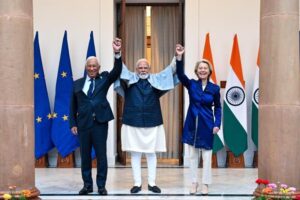
The European Union and India have concluded negotiations on a landmark free trade agreement, marking the largest deal ever reached by either side. The agreement is described as ambitious and commercially significant, strengthening economic and political ties between the world’s second and fourth largest economies at a time of heightened geopolitical and global economic pressures.
The deal creates a free trade area covering a combined market of around two billion people and underscores a shared commitment to economic openness and rules-based international trade.
Ursula von der Leyen said the agreement represents a historic step in relations between the two partners. “The EU and India make history today, deepening the partnership between the world’s biggest democracies. We have created a free trade zone of two billion people, with both sides set to gain economically,” she said.
Trade between the EU and India currently exceeds €180 billion annually in goods and services, supporting close to 800,000 jobs within the EU. The agreement is expected to double EU goods exports to India by 2032 through the elimination or reduction of tariffs on 96.6% of EU goods exports. Overall tariff savings are estimated at around €4 billion per year for European exporters.
India has granted the EU its most extensive market access to date under any trade agreement, providing a competitive advantage for key EU industrial and agri-food sectors. Tariffs on cars will be reduced gradually from 110% to as low as 10%, while duties on car parts will be fully eliminated within five to ten years. Significant tariff reductions will also apply to machinery, chemicals and pharmaceuticals.
Agri-food exports will benefit from major tariff cuts, including reductions on wine, olive oil and processed agricultural products, while sensitive EU sectors such as beef, poultry, rice and sugar remain excluded. All Indian imports will continue to be subject to the EU’s health and food safety standards.
The agreement also improves EU access to India’s services market, including financial services and maritime transport, and introduces strong protections for intellectual property rights. A dedicated chapter on trade and sustainable development reinforces commitments on environmental protection, labour rights and climate action.
Negotiated texts will now undergo legal review and translation before being submitted for approval by EU institutions. Following ratification by both sides, the agreement can enter into force.
The post EU and India conclude landmark free trade agreement appeared first on Container News.
Content Original Link:
" target="_blank">