














Sea Intelligence: Additional 11% ETS decline in new networks

However, the data shows carriers are effectively mitigating their tax exposure, by utilising other non‑EU ports geographically close to the EU, which resets the ETS distance calculation, allowing them to report short sailing distances. By mapping the port rotation of each Asia-Europe container service, Sea-Intelligence can see that the newly announced networks reduce the aggregate ETS‑chargeable sailing distance by another 11%, compared to the 2025 networks.
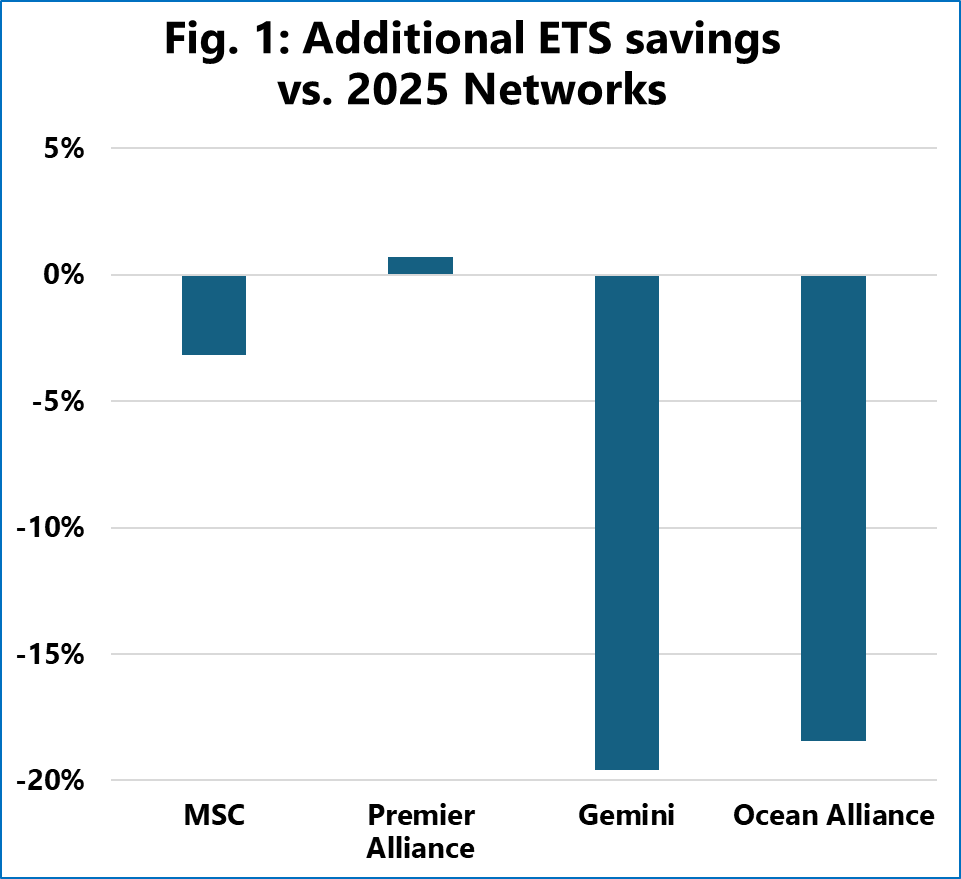
Figure 1 illustrates the additional savings achieved through these network redesigns, broken down by alliance. While MSC has the highest total absolute ETS‑distance reduction compared to a Singapore‑Algeciras baseline, they and Premier Alliance have not significantly changed their ETS sailing distance over the past year. Rather, the new 11% aggregate reduction is driven almost entirely by Gemini Cooperation and Ocean Alliance, with their new networks achieving a near 20% additional reduction each, in their reportable sailing distances, compared to their 2025 networks. This allows them to close the competitive cost‑advantage gap to MSC.
Carriers will naturally argue that their port-to-port connectivity design is primarily driven by customer demand and operational efficiency. However, it is indeed noteworthy how these network adjustments happen to coincide with the ability to significantly reduce their reportable carbon emissions, shielding them from substantial ETS tax exposure.
The post Sea Intelligence: Additional 11% ETS decline in new networks appeared first on Container News.
Content Original Link:
" target="_blank">