








In modern shipping, port calls
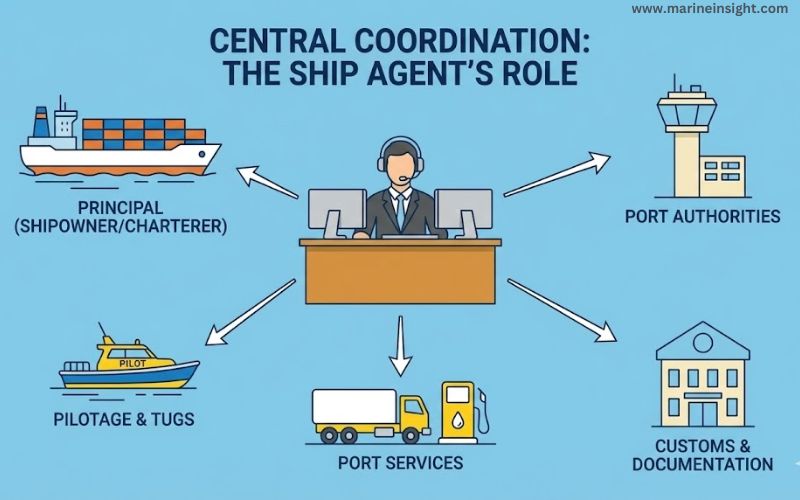
In modern shipping, port calls involve far more than a vessel’s physical arrival and departure. Each call requires coordination between shipowners, charterers, port authorities, service providers, and regulators. At the centre of this coordination sits the ship agent, often working quietly in the background, yet playing a decisive role in ensuring that port operations run smoothly. Understanding the responsibilities of ship agents is essential for appreciating how ships transition efficiently between sea and shore.
Below are five key responsibilities that define the professional role of a ship agent.
1. Acting as the Principal’s Local Representative
A ship agent functions as the local representative of the shipowner or charterer at the port. Since the principal is usually based in another country, the agent becomes the primary point of contact for all matters related to the port. This includes liaising with port authorities, terminals, pilots, and service providers, while ensuring that the principal’s instructions are accurately carried out. Clear communication and adherence to authority limits are critical, as agents act on
Content Original Link:
" target="_blank">