








In the global shipping chain,
In the global shipping chain, the shipper is often the starting point of the entire transport process. While much attention is placed on shipowners, carriers, and charterers, the role of the shipper carries its own set of responsibilities that directly influence safety, efficiency, and legal compliance. A clear understanding of these responsibilities is essential, as shortcomings at the shipping stage can lead to delays, disputes, or liability later in the voyage.
Outlined below are five important responsibilities of a shipper in maritime transport.
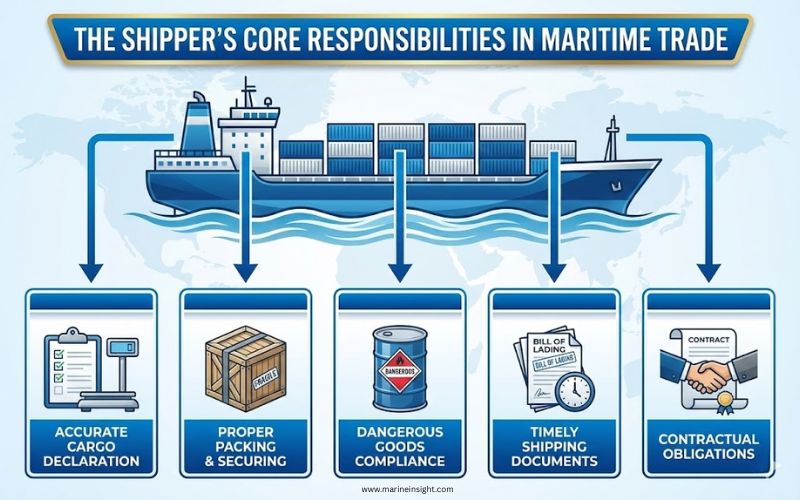
1. Providing Accurate Cargo Information
One of the shipper’s most fundamental responsibilities is to declare cargo details accurately. This includes the correct description, weight, quantity, and nature of the goods. Any misdeclaration—whether intentional or accidental—can affect vessel stability, stowage planning, and regulatory compliance. Inaccurate information has been a contributing factor in several cargo damage incidents and operational disruptions, particularly where hazardous or special cargoes are involved.
2. Proper Packing, Marking, and Labelling of Cargo
Shippers are responsible for ensuring that cargo is suitably packed for sea
Content Original Link:
" target="_blank">