














On an Argentinian-led science expedition aboard Schmidt Ocean Institute’s R/V Falkor (too), a science team observed stunning biodiversity along the country’s continental shelf. Traveling along the entire length of the coastline, from
On an Argentinian-led science expedition aboard Schmidt Ocean Institute’s R/V Falkor (too), a science team observed stunning biodiversity along the country’s continental shelf. Traveling along the entire length of the coastline, from Buenos Aires in the north to an area offshore from Tierra del Fuego, the team documented the largest known Bathelia candida coral reef in the global ocean, several other rich reef complexes, and 28 suspected new species, including worms, corals, sea urchins, sea snails, and sea anemones.
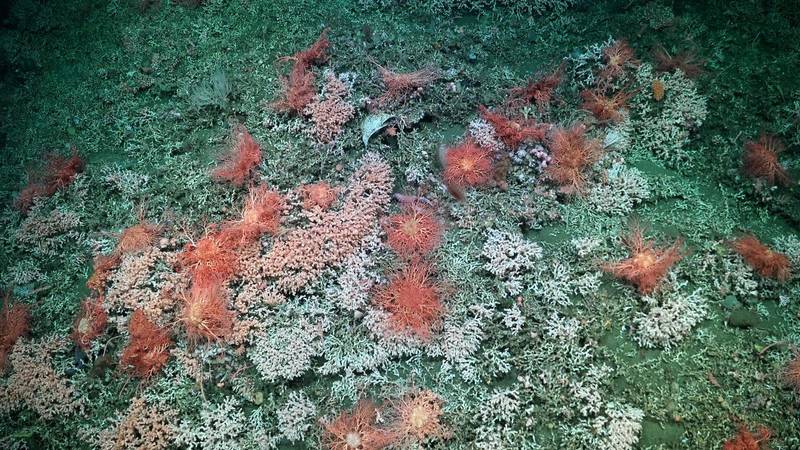 Deep-sea corals are slow-growing and long-lived. They are often classified as Vulnerable Marine Ecosystems, or VMEs, because they support high biodiversity and are threatened by human activities such as bottom trawling. In this image, red and pink basket stars (Gorgonocephalus chilensis) perch on top of white hard corals (primarily Bathelia candida and Solenosmilia sp.). The sea stars and corals actively feed by capturing particles and small organisms from the water. © ROV SuBastian / Schmidt Ocean Institute
“We were not expecting to see this level of biodiversity in the Argentine deep sea, and are so excited to see it teeming with life,” said the expedition’s chief scientist, Dr. María Emilia Bravo of the University of Buenos Aires and CONICET. “Seeing all the
Content Original Link:
" target="_blank">


