













Bids Received for Removal of MSC Baltic III as Weather Damages Hulk
Nearly a year after the MSC containership MSC Baltic III blacked out and grounded in a remote part of Newfoundland, Canada, salvage companies are now bidding to undertake the removal of the hulk. The second phase of the operation is being planned as efforts to clean the wreck were largely completed before winter weather set in, limiting the progress.
The insurance company for the vessel, ABL Group, reportedly closed bidding last week closed bidding for the removal project.
The Canadian Coast Guard emphasized that under Canadian law, MSC is responsible for the removal of the MSC Baltic III from Cedar Cove. It continues to monitor the situation, confirming that it understands that the bidding process for the vessel’s removal has concluded with the proposals now being reviewed.
A contract is expected to be awarded in the coming weeks. Work, however, is not likely to begin until spring. Reports said the proposals would decide if the vessel is to be removed from shore or the water, or possibly some combination. Even before the most recent damage to the vessel during winter storms that overspread the area since November, the Canadian Coast Guard had said it would be difficult to refloat the MSC Baltic III.
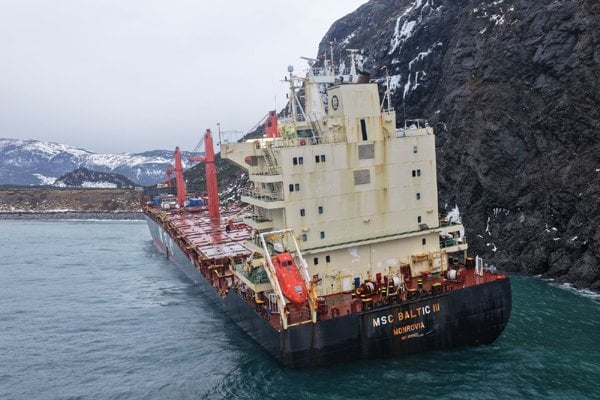
After a series of storms since November 2025, the wreck is showing further damage
When the containership lost power on February 15, 2025, it was driven ashore, and the Royal Canadian Air Force performed a daring helicopter rescue to pluck the 20 seafarers from the ship. When it went aground, it was carrying 471 containers and had about 1,700 tonnes of fuel aboard. MSC and the insurance company retained T&T Marine Salvage for the first phase of the operation, which focused on the remediation and stabilization of the vessel, removing the fuel and other potential contaminants.
The Qalipu First Nation, which is monitoring the operation on its ancestral territories, recently reported that it was advised of the 1,700 tonnes of fuel, approximately 21 tonnes remain, mostly as small residual amounts spread across different tanks. Some of this fuel is thick and sticky, similar to tar, which makes it more challenging to remove. Additionally, the Coast Guard reported there were approximately 60 containers in the holds of the ship that were flooded and difficult to remove. Some have rotting foodstuffs, which also present a challenge.
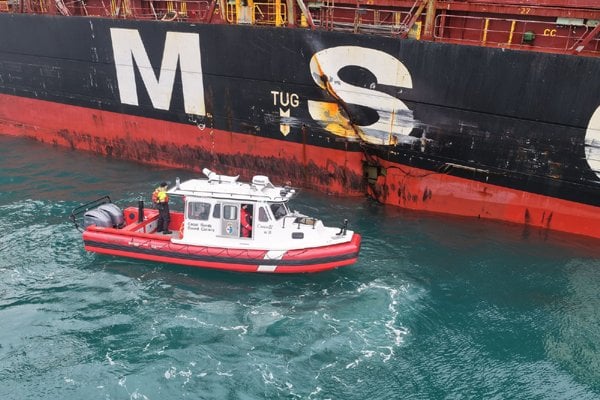
Canadian Coast Guard inspecting recent damage to the hull

that matters most
Get the latest maritime news delivered to your inbox daily.
Since November, the storms have increased the buckling in some of the hull plating, and the stern appears to have settled further. The ship also has a small list. The Canadian Coast Guard reported that additional structural damage was visible in a number of areas, including below deck, in the framing, and in the bulkheads, in the area of a water ballast tank.
In preparation for the winter, the teams had flooded some of the ballast tanks on the ship. The Canadian Coast Guard reports it is continuing to monitor the vessel and survey its condition after the storms as conditions permit.
Content Original Link:
" target="_blank">


